
Buy-Sell Agreement Life Insurance: Guide for California Business Owners
Life insurance funds the purchase required by a buy-sell agreement after an insured owner dies; it does not create the agreement or transfer ownership itself. Consider cross-purchase when surviving owners should buy directly, and entity redemption when the business should buy, subject to legal, tax and valuation review.
The practical test is whether the intended purchaser receives enough usable cash to meet the contract's obligation. Start with the transaction you want, rather than choosing a policy first.
Key Considerations
- Choose the purchaser before assigning policy ownership and beneficiaries.
- Connelly makes corporation-owned redemption proceeds an important estate-valuation issue.
- Business growth and owner departures require both agreement and coverage reviews.
What Does Life Insurance Fund in a Buy-Sell Agreement?
Life insurance supplies cash for the agreed purchase of a deceased owner's business interest. The agreement establishes the buyer, seller, triggering event and price mechanism; the policy pays its beneficiary under the insurance contract.
The intended sequence is straightforward: an insured owner dies, the beneficiary submits a claim, and the purchaser uses available proceeds to pay the estate or other seller in exchange for the ownership interest. Payment and transfer still follow the agreement's closing provisions. Insurance does not automatically convey shares.
The California Department of Insurance's Life Insurance Guide identifies providing a surviving partner with buyout resources as a business use of life insurance. That purpose differs from key person coverage, which addresses the company's financial loss from losing an important contributor.
Death-benefit funding also does not, by itself, fund retirement, resignation or disability buyouts. Those events need their own contractual funding arrangements within your broader business succession insurance planning.
Should Owners Buy Directly or Should the Business Redeem?
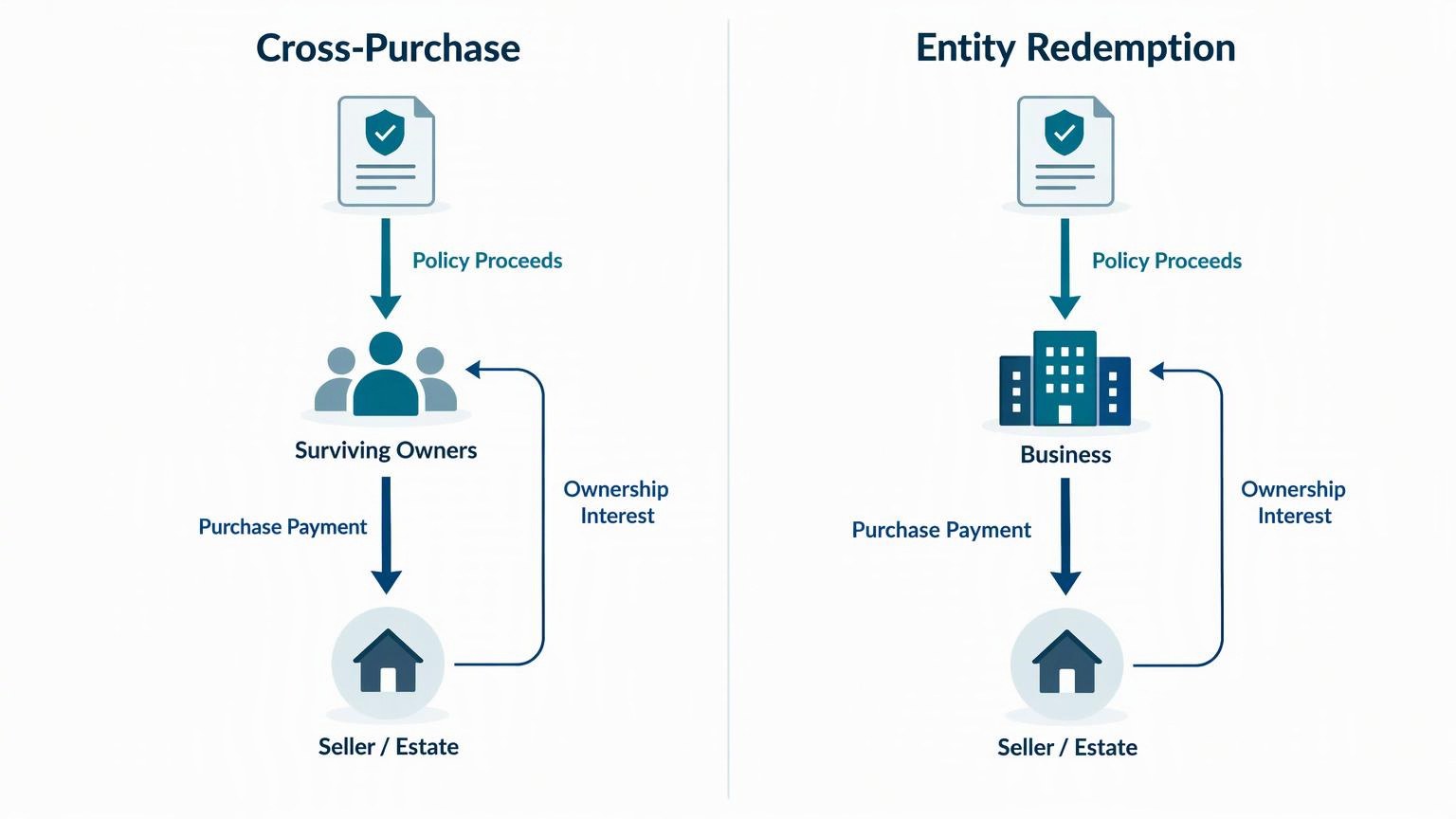
Cross-purchase places the purchase obligation with the surviving owners. Entity redemption places it with the business. Neither is universally better: the intended ownership outcome, policy administration and tax consequences should drive the choice.
In a conventional insured cross-purchase arrangement, owners hold policies on each other and receive proceeds to purchase the deceased owner's interest. This can suit a small ownership group that wants direct purchases. Adding owners can make policy arrangements more cumbersome.
With entity redemption, the business owns coverage and receives proceeds to redeem the interest. Centralized policy management may be attractive, but company-held proceeds introduce valuation considerations discussed below. Entity type and the owners' tax circumstances also require review.
Compare these structures before comparing carriers. A convenient premium-payment arrangement is not enough reason to select the legal purchaser. Your attorney and tax adviser should evaluate the ownership and tax effects, while Rene evaluates insurance funding for the chosen design.
| Structure | Policy Owner and Beneficiary | Suitable When | Trade-Off |
|---|---|---|---|
| Cross-purchase | Owners hold coverage on other owners and receive proceeds | Surviving owners should purchase directly | More owners can complicate policy administration |
| Entity redemption | Business owns coverage and receives proceeds | Business should redeem the deceased owner's interest | Centralized administration, but company proceeds require valuation and tax review |
Compare Funding for Your Intended Purchaser
Discuss your proposed buy-sell structure, coverage needs and premium budget with Rene Farias over Zoom.
How Should Ownership, Beneficiaries and Valuation Align?
The party obligated to buy should have access to the intended funding, and the coverage target should reflect the agreement's price mechanism. An owner, insured person and beneficiary are different roles; matching only the insured person's name is not sufficient.
Use this implementation sequence:
- Define the transaction: your attorney establishes the purchaser, triggering events and closing obligations.
- Establish value: the valuation professional applies the selected method, including any required appraisal or price update.
- Review tax treatment: your tax adviser evaluates the structure and applicable insurance requirements.
- Compare funding: Rene reviews coverage needs, policy duration and budget across insurance options.
- Reconcile the records: compare the signed agreement with issued policy ownership, beneficiaries and available benefits.
Address Employer-Owned Insurance Before Issuance
Where employer-owned insurance rules apply, written notice and consent requirements matter before issuance. Notice must address the intended insurance, maximum face amount and policyholder's beneficiary status; consent includes possible continuation after employment ends. IRS Notice 2009-48 also explains applicable exceptions to the income-exclusion limitation and annual Form 8925 reporting. Your tax adviser should determine applicability, rather than assume a buyout purpose alone satisfies the rules.
Why Does Connelly Matter to Entity-Redemption Planning?
Connelly matters because corporation-owned life insurance proceeds used for redemption can increase the corporation's value for federal estate-tax purposes. The redemption obligation does not necessarily offset those proceeds.
In Connelly v. United States, decided June 6, 2024, the Supreme Court held that the corporation's obligation to redeem shares at fair market value did not offset the insurance proceeds when valuing the deceased shareholder's interest. Valuation occurred at death, before the redemption payment.
The decision did not invalidate all buy-sell agreements. It does mean that earmarking company-held proceeds for a buyout is not enough to exclude them from the valuation. Simply buying more insurance may itself affect the valuation analysis.
Have your attorney, tax adviser and valuation professional assess the actual redemption design before adjusting coverage. The agreement's purchase price and the estate-tax value are not automatically identical. Likewise, income-tax treatment of the death benefit is a separate question from estate valuation.
What Changes When the Business Grows or an Owner Leaves?
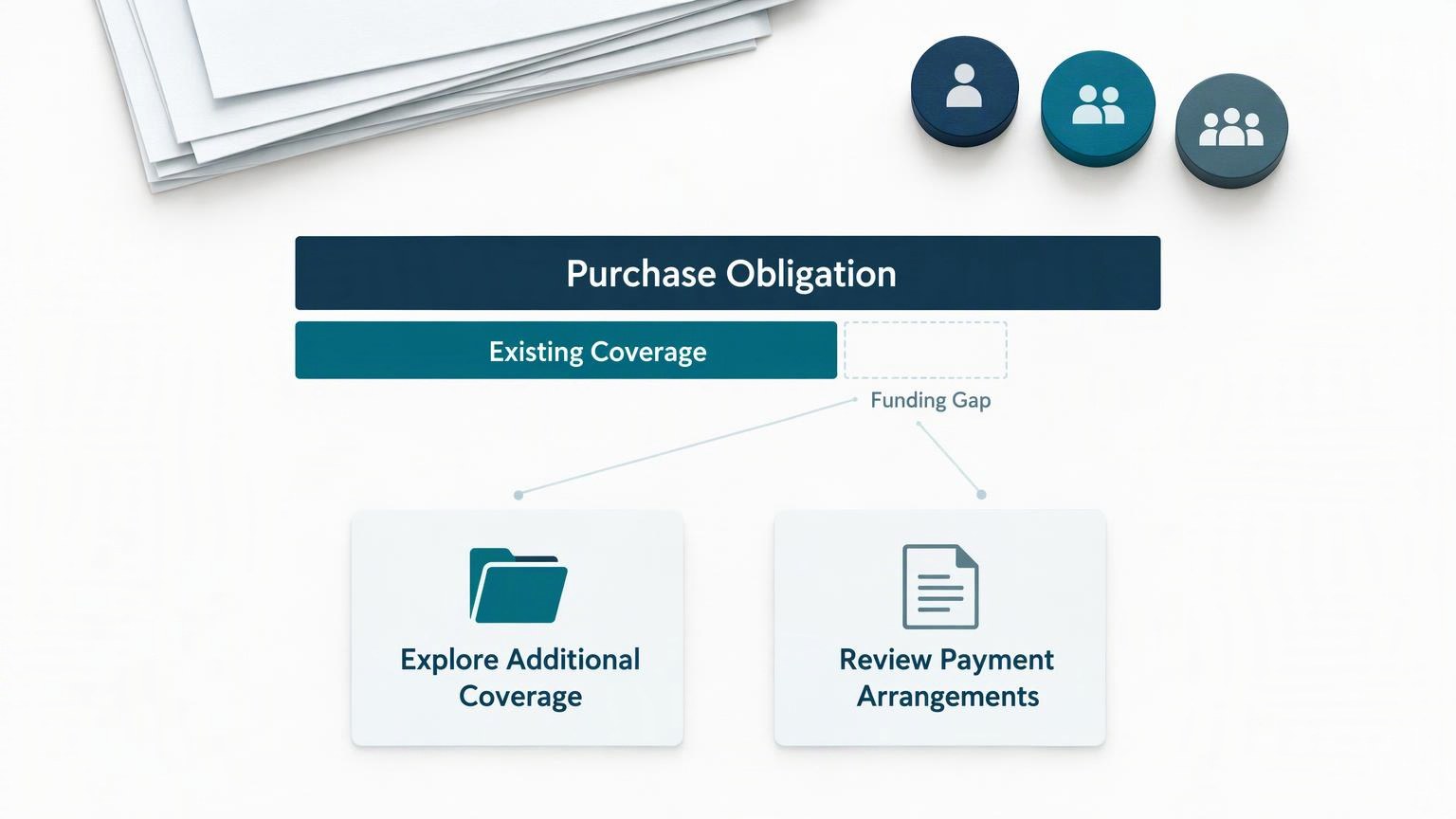
A valuation change can create a gap between the purchase obligation and available insurance. An owner departure can make existing policy ownership and beneficiaries inappropriate. Neither change automatically rewrites the agreement or adjusts coverage.
After an exit, determine whether policies should be retained, transferred or surrendered under the agreement. Do not transfer a policy casually: Section 101's transfer rules can affect death-benefit income-tax treatment. Obtain tax review before changing ownership.
Hypothetical: Growth Outpaces Existing Coverage
Suppose co-owners use cross-purchase funding, but a new appraisal raises the required buyout above existing benefits. Their fixed constraint is preserving operating cash for the business.
They could seek supplemental coverage, subject to underwriting and budget, or negotiate another funding source and payment arrangement. If suitable additional coverage is available and affordable, it better supports the immediate-cash objective. If not, a revised payment arrangement may be necessary, but it shifts financing risk to the seller and requires legal agreement. The shortfall cannot simply be ignored.
Prepare one review packet: the signed agreement and amendments, current valuation, ownership roster, and policy ownership, beneficiary, benefit and premium records. Rene's planning for business owners can support the insurance discussion; legal amendments and tax determinations remain with the relevant professionals.
Work With Rene Farias
Rene Farias works with California families, professionals and business owners to compare insurance-based protection and retirement-planning strategies. He is based in Los Angeles and offers strategy sessions over Zoom.
Frequently Asked Questions
Does Buy-Sell Funding Require Permanent Life Insurance?
No. Term insurance may fit a defined coverage period, while permanent coverage may warrant consideration for a longer-lasting obligation. Compare the required duration, sustainable premiums and contractual benefits. Cash value is not necessary merely because a policy funds a buy-sell agreement; the death-benefit objective comes first.
Can an Existing Family Policy Also Fund the Buyout?
Possibly, but do not count the same benefit twice. A family beneficiary may not be the intended purchaser, and redirecting proceeds could reduce household protection. Evaluate ownership, beneficiary rights, available benefits and the family's remaining needs before treating an existing policy as committed business funding.
What If an Owner Cannot Obtain the Desired Coverage?
The agreement still needs a realistic funding plan. Compare available insurance with reserves, financing or a negotiated installment arrangement rather than assuming full coverage will be approved. The attorney should address payment obligations and seller protections; the insurance advisor can evaluate available coverage without promising approval or a particular premium.
Does a Disability Automatically Trigger a Life Insurance Payment?
No. Ordinary death-benefit coverage pays upon the insured's death under policy terms, not simply because the owner becomes disabled. A buy-sell agreement may separately define a disability purchase trigger. Funding that obligation requires its own analysis; a living-benefit rider should not be assumed to match the contractual trigger.
Can the Seller Be Promised Immediate Payment From Insurance?
Do not equate a contractual closing deadline with an insurer's claim-payment timing. The purchaser must satisfy the agreement, while the claim follows policy requirements. Your attorney should address how the transaction proceeds if benefits are not yet available, including any agreed interim funding or payment provisions.
Review Whether Your Buyout Obligation Is Funded
Use a Zoom strategy session with Rene Farias to compare your existing coverage with the purchase obligation in your agreement and identify insurance adjustments for professional review. Keep the signed agreement and current valuation available for that discussion.