
Defined Benefit Plan: Complete Guide for Business Owners
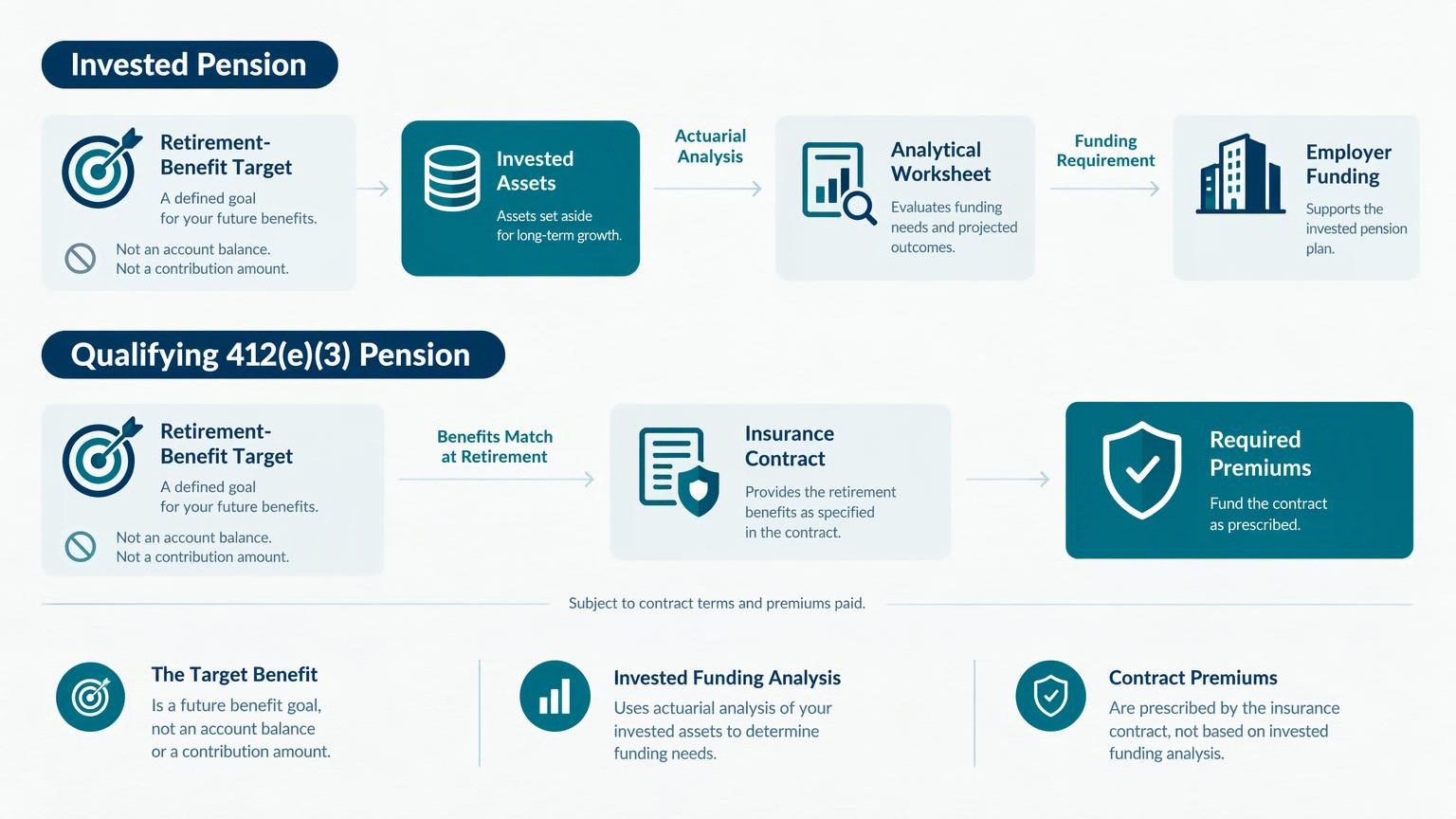
A defined benefit plan can suit business owners seeking a pre-established retirement benefit who can sustain funding for themselves and eligible employees. Compare conventional and cash balance pensions with fully insured 412(e)(3) plans: invested designs use actuarial funding calculations, while qualifying insured plans fund contract-backed benefits through prescribed premiums.
Start with the retirement income you want to provide, not the largest deduction. Connect that goal to funding choices, employee obligations and professional review, including the distinct fully insured pension rules.
Key Considerations
- Compare the proposed benefit and total employer commitment, not just the plan name.
- A qualifying 412(e)(3) pension has contract-based funding and a specific minimum-funding exemption.
- Assign professional responsibilities before adoption; outside support does not eliminate employer duties.
Which Retirement-Plan Design Fits Your Business?
Investigate a pension if a defined retirement benefit matters more than annual contribution discretion. Retain an account-based arrangement if variable business cash flow is the priority.
A conventional pension establishes a formula benefit. A cash balance plan is a hybrid within the defined benefit category, not a defined contribution account; pension funding obligations still apply.
A fully insured 412(e)(3) pension uses qualifying contracts to support benefits. It suits owners who prefer contractual backing and can sustain prescribed premiums.
The IRS explains that defined benefit plans generally support larger contributions than defined contribution plans and can coexist with other plans. That potential does not establish affordability.
How Does a Target Benefit Become a Funding Requirement?
The retirement benefit is the promise; funding supports it. The benefit, annual contribution and deductible amount are different figures.
For an invested pension, an enrolled actuary evaluates obligations and assets to determine funding. Investment results affect the employer's funding position, not simply replace the formula benefit with remaining assets.
For a qualifying insured pension, plan benefits must match contract benefits at normal retirement age. Required premiums drive funding, rather than a discretionary deposit based on profits.
Read proposals in order: promised benefit, funding method, total employer payment and tax treatment. An annual-benefit limit is not a contribution allowance. Actual funding and deductions require plan-specific professional analysis.
| Approach | Suitable Priority | Trade-Off |
|---|---|---|
| 401(k) With Discretionary Profit Sharing | Account-based savings with discretion over profit sharing | Account outcomes vary; other employer contributions may be required |
| Conventional Defined Benefit Pension | A formula-based retirement benefit funded through invested assets | Actuarial funding can change with the plan's funding position |
| Cash Balance Pension | A hybrid pension presentation within the defined benefit category | Still requires pension funding analysis and employee obligations |
| Fully Insured 412(e)(3) Pension | Contract-backed benefits funded through prescribed premiums | Must satisfy exclusive contract-funding requirements and sustain premiums |
How Does a Fully Insured 412(e)(3) Pension Work?
A 412(e)(3) pension provides contractual benefit backing. The insurer guarantees contract benefits to the extent premiums have been paid, subject to contract terms and the insurer's obligations.
IRS guidance on fully insured plans requires exclusive funding through individual annuities or a combination of annuities and life insurance contracts. Life insurance is optional.
- Level annual premiums begin with participation and extend no later than retirement age.
- Plan benefits equal contract benefits at normal retirement age.
- All required premiums are paid before lapse, or the policy is reinstated.
- Contract rights cannot be subject to a security interest during the plan year.
- No policy loans may be outstanding during the plan year.
Qualifying plans are exempt from Section 412 minimum-funding rules, not premium payments, qualification, participation, reporting or administration requirements.
Do not automatically apply conventional pension annual actuarial valuation and Schedule SB requirements to this subtype. The plan professional identifies applicable filings and services. Contract-based funding still requires competent design, records and ongoing compliance.
Discuss the Insured-Pension Option
Use a strategy session with Rene Farias to compare how contract-backed retirement benefits fit your goals before selecting insurance funding.
How Do Employee Benefits Affect the Owner's Cost?
Evaluate costs for the eligible workforce, not just the owner. An owner-focused goal does not permit arbitrary employee exclusions or predetermined owner allocations.
Participation follows applicable age and service conditions; plan documents can be more inclusive. Certain non-401(k) plans can require longer service only with immediate vesting under applicable rules.
The plan professional uses employee census, compensation, service and ownership information to evaluate eligibility, coverage and nondiscrimination. For insured designs, this also identifies whose benefits need contract funding.
Compare total employer costs: owner benefits, employee benefits and administration. An owner-only illustration may look different once employees are included. Workforce costs belong in the feasibility review before contracts are purchased.
What If Strong Profits May Not Continue?
Choose funding your business can sustain without uncertain revenue. One strong year does not justify recurring pension obligations.
Hypothetical example: An owner with a 401(k) wants additional retirement benefits but needs operating reserves because a major revenue contract may not renew.
Compare retaining the current arrangement, adding an invested pension and adopting an insured pension. Test the invested proposal against changing funding requirements; test the insured proposal against prescribed premiums. Include workforce costs in both.
If either requires that uncertain revenue, retaining the current arrangement is more defensible. If funding remains affordable without it, continue evaluating pensions. Preference for contractual backing can favor the insured design, but guarantees cannot solve a cash-flow shortfall.
How Do You Move From Interest to Professional Review?
Start with feasibility before selecting contracts or adopting a plan.
- Prepare ownership details, employee census, compensation, existing plan documents, retirement goals and a sustainable budget.
- Have plan professionals compare designs, employee costs, funding and administration.
- Have tax and legal advisers address deductions and implementation.
- Assign contributions or premiums, records, testing and applicable filings before adoption.
A third-party administrator can support design and compliance; an enrolled actuary handles applicable work for invested pensions. Define insured-plan services under their specific rules, rather than assuming every pension requires identical support. Establish an annual operating process.
Work With Rene Farias
Rene Farias is an independent insurance advisor based in Los Angeles, serving California clients over Zoom. His planning for business owners includes insurance-based retirement and protection strategies. He can discuss insured-pension contracts; actuarial certification, tax determinations and legal advice belong with the appropriate professionals.

Work With Rene Farias
Rene Farias works with California families, professionals and business owners to compare insurance-based protection and retirement-planning strategies. He is based in Los Angeles and offers strategy sessions over Zoom.
Frequently Asked Questions
Can Life Insurance Inside the Pension Also Provide a Death Benefit?
Yes, within qualified-pension rules. Retirement benefits remain the primary purpose; participant death benefits must satisfy incidental-benefit limits. Current life insurance protection can create annual taxable economic-benefit income. A later policy transfer has valuation and tax consequences that require professional review.
Does Buying an Annuity Alone Establish a 412(e)(3) Plan?
No. Buying an annuity alone neither establishes an employer pension nor satisfies plan qualification requirements. The plan document, benefit structure, participation rules and contract terms must work together. A personally owned annuity does not automatically become an employer's qualified pension.
Can a Pension Permit Participant Loans?
A conventional pension may permit participant loans under its document and applicable rules. A qualifying 412(e)(3) plan separately prohibits outstanding policy loans during the plan year. General pension loan availability does not authorize borrowing against contracts that fund an insured pension.
Can I Reduce Benefits Already Earned If Business Slows?
You cannot simply decrease accrued benefits retroactively because revenue falls. Future benefit changes, funding adjustments or termination require professional analysis and applicable procedures. Discuss shortfalls before missing payments; the insured plan's minimum-funding exemption does not remove its contractual premium requirements.
Does Pension Life Insurance Replace Business Succession Coverage?
Not automatically. Pension life insurance follows retirement-plan benefit and tax rules. Business succession insurance addresses ownership-transition needs separately. Compare beneficiaries, ownership and intended use with your advisers rather than assuming one policy can satisfy both the pension and business succession objectives.
Bring Your Retirement Target Into an Insurance Strategy Review
Bring your retirement target, sustainable budget and existing protection to a Zoom discussion with Rene Farias. Clarify insurance questions for your professional pension feasibility review.