
Executive Bonus Plan (Section 162): Guide for California Business Owners
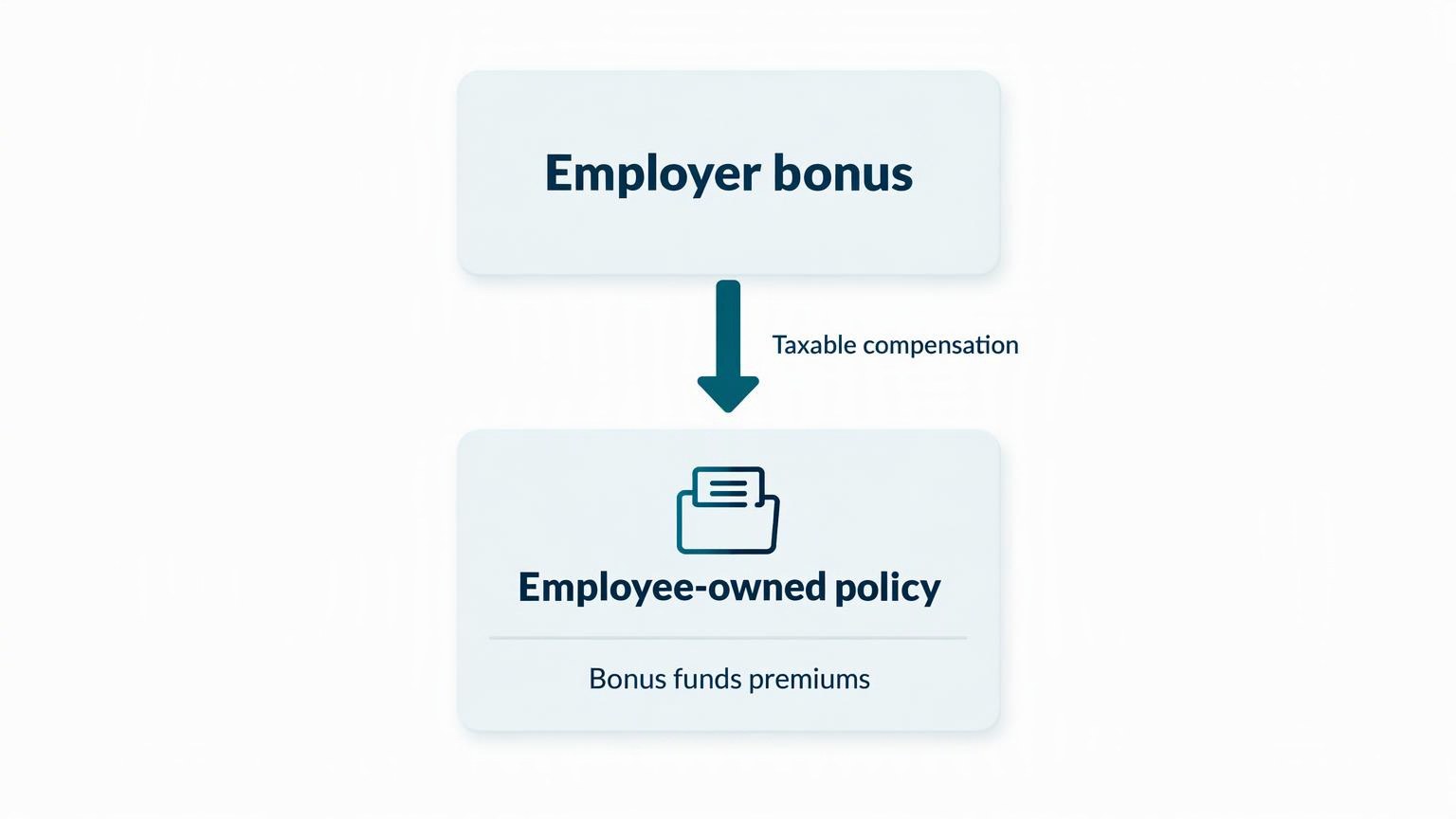
A Section 162 executive bonus arrangement uses employer-paid compensation to fund employee-owned life insurance. Consider it when you want to reward an employee with personal protection, not insure the business itself. The bonus is taxable compensation; any employer deduction and retention restrictions require separate tax and legal review.
For California business owners, the central question is what the benefit should accomplish. An employee reward, protection against losing a key person and a retirement savings program are different objectives. Start with that purpose before selecting a policy or attaching employment restrictions.
Key Considerations
- Employer funding does not make an employee-owned policy a business asset.
- Budget for compensation taxes, not just the insurance premium.
- Restricted access can create a retention incentive but conflict with an employee's liquidity needs.
How Does a Section 162 Executive Bonus Arrangement Work?
The employer provides a bonus intended to fund life insurance owned by the employee. The employee uses the bonus to pay premiums to the insurance carrier. The bonus is taxable employee compensation.
“Section 162” refers to the business-expense deduction framework, not a special IRS-qualified retirement account. The arrangement combines a compensation commitment with an insurance contract. Each has its own terms: the employer's bonus decision is separate from the insurer's premium and coverage requirements.
This approach can suit a business that wants to provide a selected employee with personal life insurance protection and can sustain the intended compensation expense. It is less compelling when the employee primarily wants spendable cash or when the employer needs the insurance proceeds.
Put Compensation Design Before Policy Selection
First define the employee benefit and a sustainable employer budget. Next, have your tax adviser assess compensation treatment and your attorney address any employment restrictions. Then compare insurance for the employee's actual protection needs. Before funding, align the written bonus terms, policy ownership, payroll handling and premium schedule. Rene Farias can help compare insurance options; the legal and tax decisions belong with the relevant professionals.
Who Owns the Policy and Receives the Benefit?
In the employee-owned arrangement discussed here, the employee owns the policy and designates its beneficiaries, subject to any valid contractual restrictions. The employer funds compensation but does not automatically acquire the policy or its death benefit.
Keep these roles separate: the employer pays the bonus, the employee is the policy owner, and the named beneficiaries receive proceeds when payable under the contract. If the intended recipient is the company, that calls for a different ownership and benefit design.
With cash-value life insurance, ownership can also carry rights to policy values. Those rights remain subject to the policy and any endorsement. Cash value is not the same as readily spendable cash: charges, surrender terms and borrowing costs matter.
Compare the employee's protection needs using Rene's California life insurance guidance. Beneficiary choices involving trusts or estate planning require attorney review; ownership and estate inclusion are separate from income-tax treatment.
| Approach | Suitable Objective | Ownership or Benefit | Main Trade-Off |
|---|---|---|---|
| Executive bonus life insurance | Reward an employee with personal protection | Employee owns the policy; designated beneficiaries receive proceeds | Taxable compensation and ongoing insurance funding |
| Employer-owned key-person coverage | Protect the company against a key employee's death | Employer owns and benefits from coverage | Does not itself provide the employee a personal benefit; employer-owned insurance rules apply |
| Qualified employer retirement plan | Provide retirement savings or a pension structure | Benefits are governed by the retirement plan | Eligibility, funding and administration requirements rather than a standalone insurance bonus |
Compare the Employee's Insurance Benefit
Discuss coverage needs, ownership and sustainable premium funding with Rene Farias over Zoom before choosing a policy.
How Is the Bonus Treated as Employee Compensation?
The premium-funding bonus is taxable employee compensation, not a tax-free insurance contribution. Your payroll and tax advisers should determine reporting, withholding and applicable employment-tax treatment, including California requirements.
The employer's potential deduction is for qualifying compensation expense. It is not a blanket rule that life insurance premiums are deductible. Section 162 provides the relevant business-expense framework; ordinary-and-necessary requirements and reasonable compensation require individual review. Calling a payment an executive bonus does not establish deductibility.
A gross-up means providing additional compensation intended to help the employee pay taxes associated with the benefit. That additional compensation is itself taxable, so the employer's outlay can exceed the premium. Your tax adviser must determine the calculation rather than applying an assumed tax bracket.
Decide whether the employee will bear the tax cost or the employer will provide additional compensation before settling the funding amount. Otherwise, an attractive premium commitment may leave an unexpected employee cash obligation.
What Can a Restricted Endorsement Change?
A restricted endorsement can limit access to policy cash value until specified dates or retirement. Its effect depends on the actual endorsement and related agreement, not the label “restricted bonus plan.”
Restricting access does not automatically transfer ownership to the employer, require repayment of earlier bonuses or guarantee that the employee will stay. Release conditions, employment termination and any repayment obligation are distinct drafting questions. Your attorney should evaluate enforceability and the consequences of the proposed California employment terms.
Hypothetical: Retention Versus Immediate Liquidity
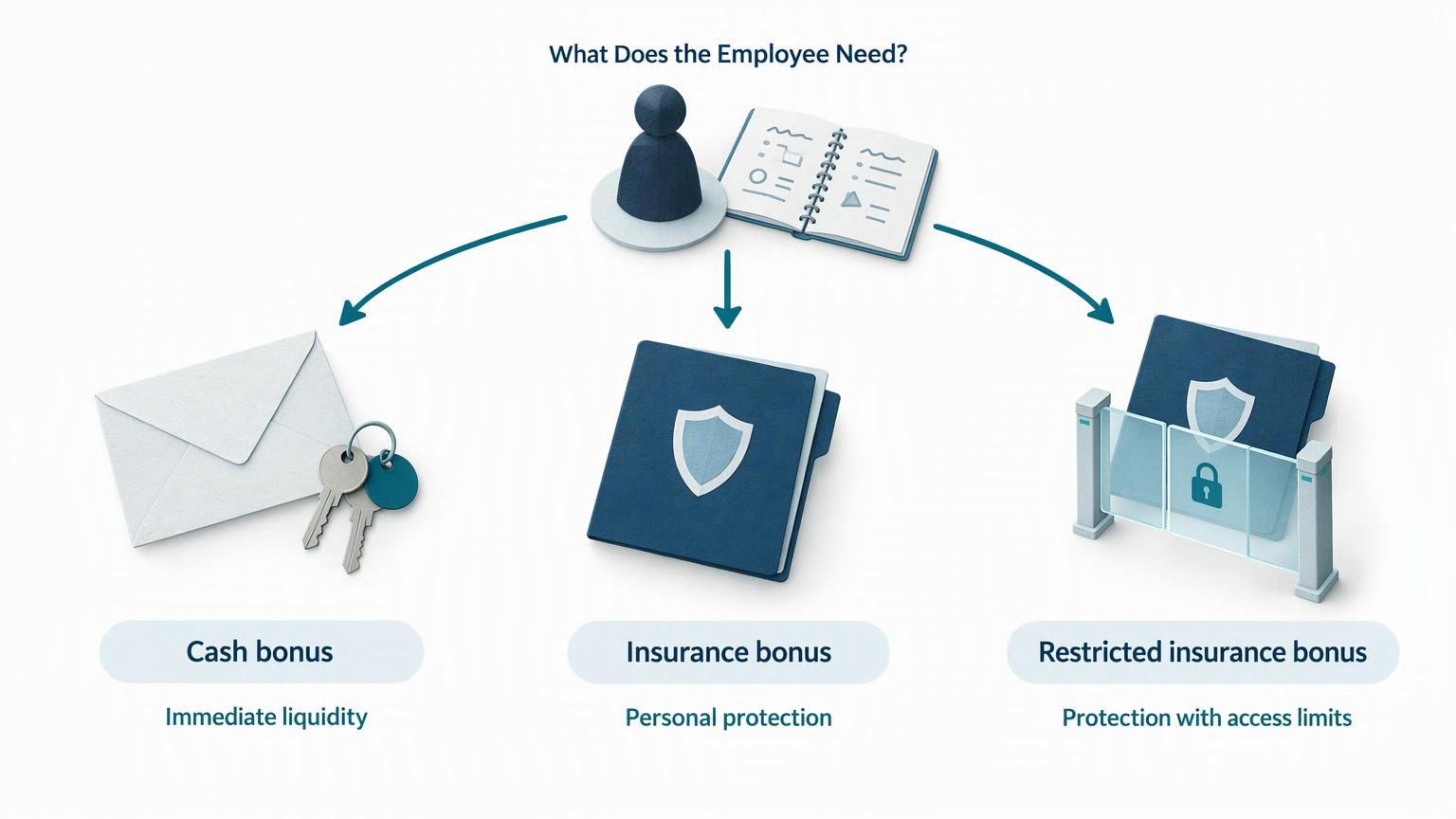
Suppose you want to reward a key employee, but the employee's fixed constraint is needing usable cash for current household obligations. An unrestricted insurance bonus provides personal coverage but still directs compensation toward premiums. A restricted version could further limit access to policy values. An ordinary cash bonus better addresses the immediate need.
If personal protection is the employee's priority instead, an insurance bonus may fit. Add restrictions only if their specific retention purpose justifies the reduced control. The decision follows the employee's constraint, not a promise that restrictions will prevent departure.
How Does It Compare With Key-Person Coverage or a Qualified Plan?
Choose employee-owned bonus insurance for an employee's personal benefit, employer-owned key-person coverage for business protection, and a qualified retirement plan when the objective calls for a formal retirement-plan structure. These approaches can coexist because they solve different problems.
Key-person coverage is not an executive reward merely because it insures an executive. Where the employer owns and benefits from the policy, IRS Notice 2009-48 explains employer-owned life insurance rules, including notice and consent, conditions for death-benefit exclusion and Form 8925 reporting. Premiums should not be assumed deductible.
A qualified employer retirement plan has eligibility, contribution or funding rules and administration requirements. Employee-owned life insurance does not become qualified retirement-plan savings simply because it is intended to supplement retirement income.
Match Each Professional to the Decision
Rene is an independent insurance advisor based in Los Angeles who works with California clients and multiple carriers. He can help compare insurance-based executive benefits and business protection. His planning guidance for business owners provides broader context. Use your attorney for agreements, your tax adviser for compensation and deductions, and a qualified plan professional for retirement-plan design and administration.
Work With Rene Farias
Rene Farias works with California families, professionals and business owners to compare insurance-based protection and retirement-planning strategies. He is based in Los Angeles and offers strategy sessions over Zoom.
Frequently Asked Questions
Does an Executive Bonus Arrangement Require Permanent Life Insurance?
The compensation concept is not the same as a requirement to build cash value. The California Department of Insurance's Life Insurance Guide distinguishes term and cash-value coverage. Choose insurance for the employee's protection needs and budget. If the proposal relies on long-term policy values, examine the permanent policy's charges and nonguaranteed assumptions.
What Happens if the Employer Stops Paying Bonuses?
The insurance contract's funding requirements do not disappear when employer compensation stops. The employee may need to fund premiums or consider available policy options. Before accepting the benefit, evaluate whether coverage can remain affordable without employer support. Any employer obligation to continue bonuses depends on the actual agreement.
Can an Existing Policy Be Used?
An existing employee-owned policy may be worth evaluating before considering new coverage. Its ownership, premium requirements and compatibility with the proposed arrangement matter. Do not assume replacement improves the benefit. Compare existing contractual features and replacement consequences, then have the compensation structure reviewed separately by your tax and legal advisers.
Can a Business Owner Receive the Same Arrangement?
Do not assume an owner has the same tax treatment as a nonowner employee. Business structure, ownership status and the nature of compensation matter. Have your tax adviser establish the appropriate treatment first. Policy suitability is a separate decision and does not establish that the business payment qualifies for a deduction.
Does Offering the Benefit Guarantee Insurance Approval?
No. A compensation commitment is not an insurer's coverage decision. The employee must satisfy the insurer's applicable application and underwriting requirements. Keep the proposed benefit conditional on the actual insurance terms, and avoid promising a premium, death benefit or policy value before the insurer has established the available coverage.
Choose the Benefit Before Funding the Policy
Bring your employee-benefit objective to a Zoom strategy session with Rene Farias. Discuss whether employee-owned insurance fits that objective and which tax, legal or retirement-plan questions need specialist review before implementation.