
Irrevocable Life Insurance Trust (ILIT): Complete California Guide
An irrevocable life insurance trust owns life insurance through its trustee and directs proceeds under the trust's terms. Consider an ILIT when estate exposure or controlled inheritance justifies surrendering personal policy control. If you mainly need straightforward family protection and flexibility, personal ownership may be more suitable. California implementation requires estate-planning counsel.
For California families, professionals and business owners, the starting point is the problem the insurance must solve: replacing income, managing an inheritance or supplying cash when estate assets are difficult to sell. A trust is an ownership structure, not a substitute for choosing sustainable coverage.
Key Considerations
- Naming a trust as beneficiary does not, by itself, remove your ownership rights.
- Income-tax exclusion of a death benefit does not establish estate-tax exclusion.
- Review an existing policy's transfer timing before changing its ownership.
What Does an ILIT Own and Control?
An ILIT is designed to hold a life insurance policy through its trustee and receive the death benefit for administration under the trust document. The central trade-off is ownership: the insured cannot retain unrestricted personal control and assume that the proceeds will remain outside the taxable estate.
Internal Revenue Code Section 2042 includes insurance payable to the executor in the gross estate. It also includes proceeds payable to other beneficiaries when the deceased held incidents of ownership at death, alone or jointly with another person. Retained policy powers therefore matter, not just the name on the beneficiary designation.
Merely naming an ILIT as beneficiary while keeping ownership is different from transferring ownership to its trustee. Counsel should examine the actual policy rights and trust powers. You should not plan on personally redirecting beneficiaries, surrendering coverage or accessing policy value as though the policy still belonged to you.
How Do the Policy and Trust Roles Differ?
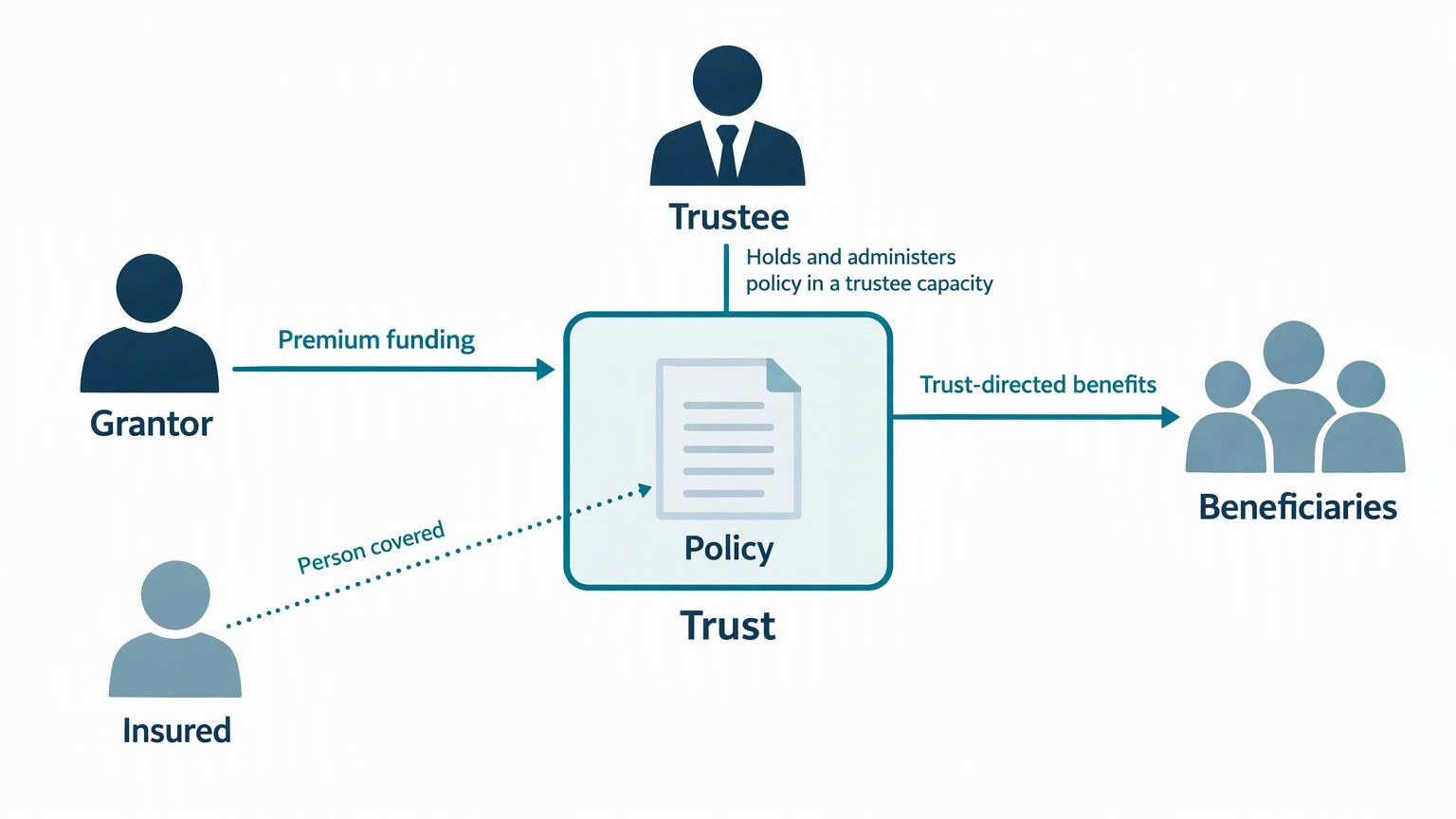
The owner controls contractual policy rights; the insured is the person whose death triggers the benefit. The trustee administers trust-owned coverage, while beneficiaries receive benefits according to the relevant policy or trust terms. These roles are related but not interchangeable.
- Grantor: The person establishing the trust and often contributing funds for premiums.
- Policy owner: In an ILIT arrangement, the trustee holds the policy in a trustee capacity rather than for personal benefit.
- Insured: The person covered by the policy, who need not be its owner.
- Trustee: The person or institution responsible for administration under the trust document.
- Beneficiaries: The ILIT may receive the insurance proceeds, while family members are beneficiaries of the trust.
Trustee selection is a substantive legal decision, particularly if the insured or a beneficiary would hold powers. Your California attorney should review role combinations, successor arrangements and any community-property questions before ownership forms are submitted.
| Approach | Suitable When | Principal Trade-Off |
|---|---|---|
| Personal ownership | Family protection and personal flexibility are the priorities | Retained ownership can cause estate inclusion |
| Personal ownership with a trust beneficiary | You want trust-directed distributions while retaining policy rights | A beneficiary change alone does not resolve retained ownership |
| ILIT ownership | Estate planning and inheritance controls justify separate ownership | Requires surrendered control and ongoing trustee administration |
How Do Estate Liquidity and Income Taxes Differ?
Liquidity means having cash available when obligations arise. Income-tax treatment asks whether proceeds are taxable income; estate-tax treatment asks whether their value enters the estate calculation. A death benefit can provide cash and be generally excluded from income while still being included in the insured's gross estate.
The IRS explains that death proceeds generally are not included in a beneficiary's gross income. Interest is taxable, and transfers for valuable consideration can limit the exclusion, subject to exceptions.
The IRS estate-tax guidance lists a $15 million filing threshold for 2026. The calculation considers the gross estate and adjusted taxable gifts; deductions and available credits affect tax liability. It is not an automatic exemption for every estate.
Trust cash also is not automatically executor cash. Counsel must design any permitted estate-liquidity arrangement. Receiving proceeds outside the estate and making funds available to it are separate planning steps.
Why Does an Existing Policy Raise a Three-Year Issue?
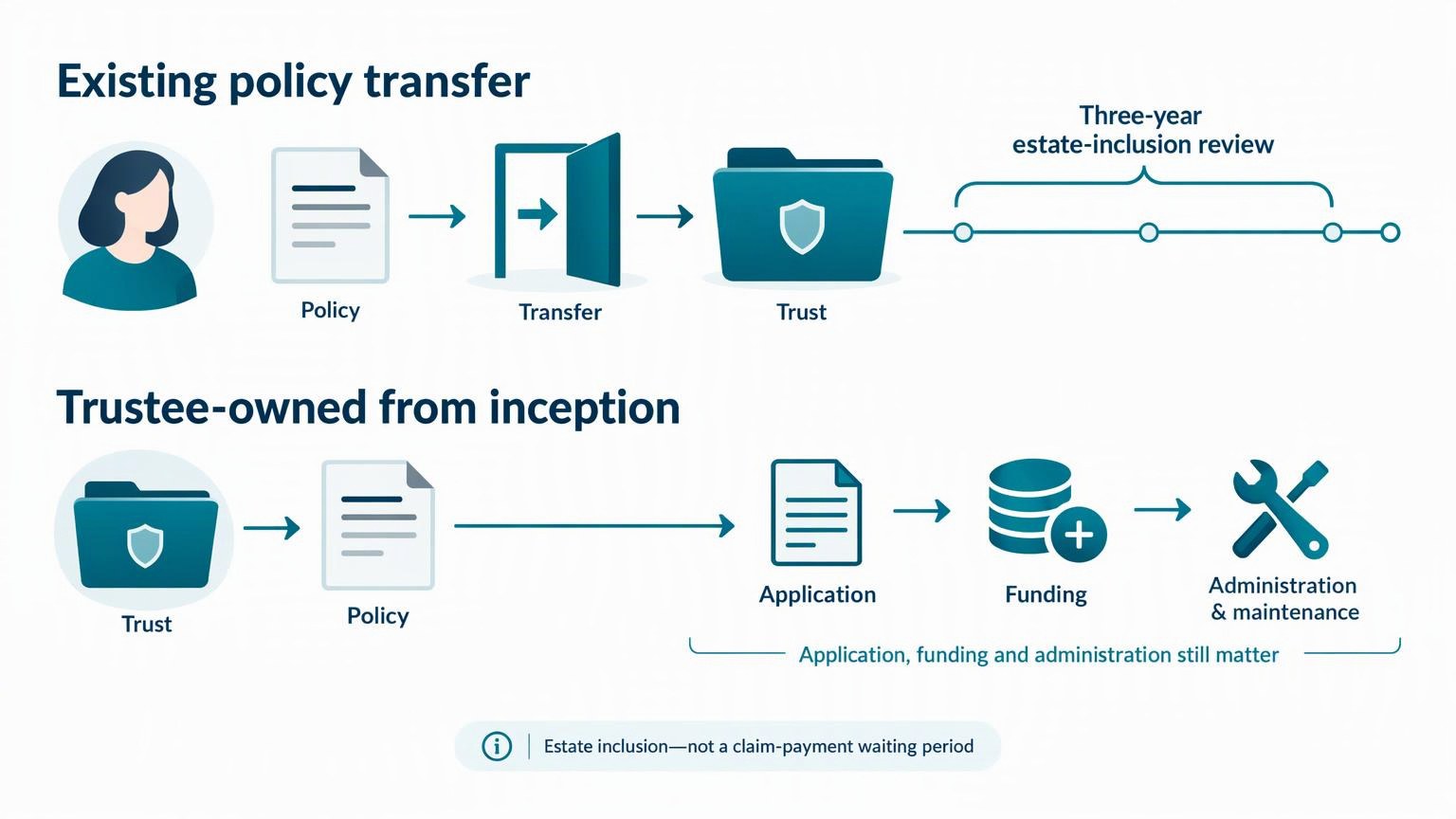
Giving an existing personally owned policy to an ILIT does not necessarily produce immediate estate exclusion. If you die within the relevant three-year period, the transfer can cause proceeds to be brought back into the gross estate.
Internal Revenue Code Section 2035 applies to certain interests transferred or powers relinquished during the three years ending at death when retaining them would have caused inclusion under specified estate-tax provisions, including Section 2042.
This is an estate-inclusion rule, not a delay in insurance coverage or a general requirement to wait three years before the insurer pays a valid claim.
A new policy owned by the trustee from inception differs because it need not involve your transfer of an existing ownership interest. That route still requires correct application structure, funding and administration. New coverage also depends on underwriting and policy terms. Do not cancel existing insurance while the legal structure and replacement coverage remain unresolved.
Review Coverage Before Choosing a Transfer Route
Discuss your existing coverage and insurance goals with Rene Farias over Zoom before deciding with counsel whether to transfer a policy or investigate new trust-owned coverage.
Who Should Consider an ILIT, and How Do You Proceed?
An ILIT warrants investigation when potential estate exposure, illiquid assets or long-term inheritance controls justify giving up ownership flexibility. It may be unnecessary when your main objective is uncomplicated income replacement, you need personal access to policy value, or ongoing trust administration would be impractical.
The policy and ownership decisions should remain separate. Rene's California life insurance guidance addresses protection options; your estate-planning attorney determines the legal structure.
A Hypothetical Business-Owner Decision
Suppose a California owner wants heirs to retain a family business, but much of the estate's value is tied up in that business. The fixed constraint is avoiding a forced sale to raise cash. The owner also wants inheritance distributions governed by trust terms.
Personal insurance ownership preserves flexibility and can supply cash to beneficiaries, but may increase the gross estate. An ILIT could address the ownership concern and manage distributions, yet the estate still needs an attorney-designed route to liquidity. If counsel identifies meaningful estate exposure and the owner accepts trustee control, investigating an ILIT follows. If liquid assets already meet the need, simpler ownership may suffice. Business succession insurance addresses a related but distinct ownership-transition objective.
Put the Legal Design Before Ownership Changes
Begin with an attorney-led estate review, including existing coverage, lifetime gifts, cash needs and distribution goals. Counsel then designs the trust and selects appropriate trustee powers. A tax adviser evaluates transfer, funding and reporting consequences.
Next, Rene Farias can help compare insurance-based protection options and funding requirements within that legal design. He is an independent insurance advisor based in Los Angeles, with strategy sessions over Zoom, not the attorney or tax-return preparer.
Before implementation, assign responsibility for ownership and beneficiary records, premium payments, contribution documentation, any required beneficiary notices and recurring reviews. Signing the trust does not complete its administration.
Work With Rene Farias
Rene Farias works with California families, professionals and business owners to compare insurance-based protection and retirement-planning strategies. He is based in Los Angeles and offers strategy sessions over Zoom.
Frequently Asked Questions
Does an ILIT Require Permanent Life Insurance?
No. The trust structure and policy type are separate choices. Coverage duration, premium sustainability and the intended liquidity need should drive the insurance comparison. A temporary protection need differs from a legacy goal requiring coverage later in life. Trust ownership alone does not make a particular policy appropriate.
What Happens if Premium Funding Stops?
The trust does not keep insurance active merely by existing. The outcome depends on the policy's payment requirements, available values and contractual provisions. The trustee needs a sustainable funding process and should address payment problems promptly with the insurer and insurance advisor rather than assume coverage will continue.
Can I Later Change an ILIT Like a Revocable Living Trust?
Do not assume you can amend or revoke it at will. Giving up that flexibility is part of the planning trade-off. Whether a particular change is legally available depends on the document and applicable law. Have your California attorney explain possible future changes before you commit, not after circumstances shift.
Does Marriage Automatically Double the Available Estate Exclusion?
No. The IRS describes portability of a deceased spouse's unused exemption as an election made on a timely filed estate-tax return. It is not automatic simply because you are married. Your tax adviser should evaluate prior gifts, available exemption and filing requirements rather than rely on a doubled headline amount.
Does an ILIT Replace a Business Buy-Sell Agreement?
No. An ILIT governs trust-owned insurance and benefits under its terms; a buy-sell agreement addresses business ownership transfers. The same death can create family inheritance needs and business succession needs, but those objectives require coordinated documents. Business counsel should determine who needs proceeds and how the ownership transition will work.
Define the Insurance Need for Your Estate Plan
Use a Zoom strategy session with Rene Farias to discuss the protection goal, existing coverage and premium commitment your proposed trust would need to support. Bring the legal ownership and tax decisions to your estate-planning attorney and tax adviser.