
Life Insurance Agent in Los Angeles, CA: How to Choose
Choose a Los Angeles life-insurance agent with California authorization, a clear explanation of policy trade-offs and a service approach that fits your needs. Prefer an independent agent when comparing multiple carriers matters; a captive agent may suit a preferred insurer. Neither model replaces checking licensing, affordability, compensation and ongoing support.
When shopping for life insurance in Los Angeles, start with the financial responsibility you want covered: family income, debt, a lasting legacy or a business obligation. That purpose gives you a way to judge an agent's recommendation. A nearby address alone does not establish suitability, and a virtual appointment can still support a detailed comparison.
Key Considerations
- Check the individual agent and issuing insurer separately through California insurance resources.
- Compare policies against the same coverage goal, time horizon and sustainable budget.
- Separate policy costs, sales compensation and post-purchase service responsibilities.
How Do You Check a California Agent's License and Insurer?
Start with the California Department of Insurance, not a badge on an agent's website. Obtain the agent's full name and California license number, then use Check License Status from the department's Life & Annuity Insurance page. Match the person you are considering to the record and review whether the license is current and appropriate for the proposed insurance.
Next, identify the legal name of the insurer that would issue the policy. Use the department's licensed life-insurance company resources and Insurance Company Profiles to investigate that company separately. An agency's name and the issuing insurer's name are not interchangeable.
If an identity or authorization does not match, resolve it before proceeding with an application. A successful check establishes a licensing baseline, not that a policy is suitable or that its illustrated results will occur. Assess insurer financial strength separately from the agent's sales explanation. An insurance license alone also does not establish authority to sell securities products.
Should You Choose an Independent or Captive Agent?
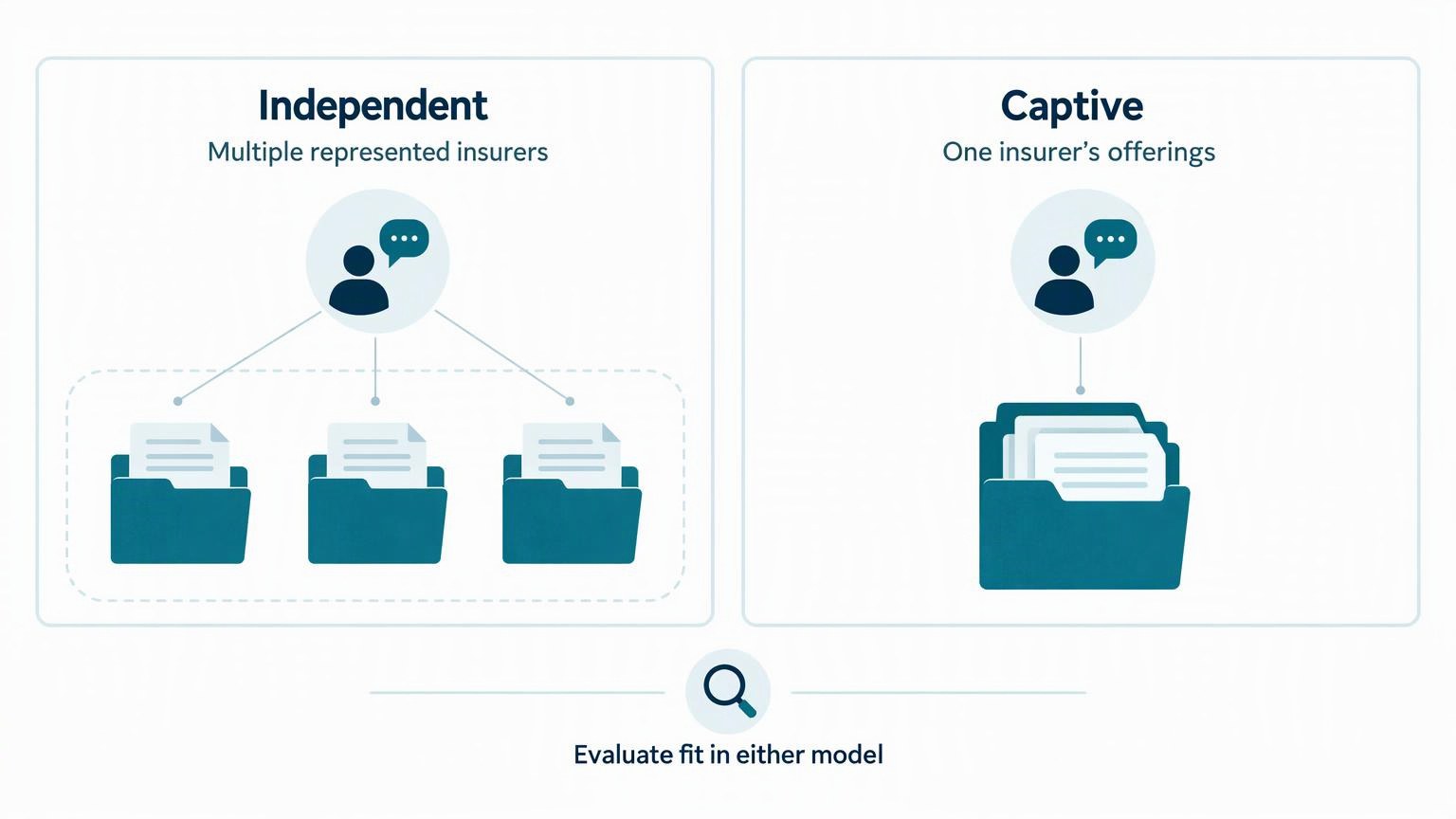
Choose independent representation when comparing options across carriers is important to your decision. A captive agent generally focuses on one insurer's offerings and can be suitable if you already prefer that company and its products meet your needs.
Independent does not mean access to every insurer or every policy. Ask which companies are included in your actual comparison and why those options were selected. Conversely, a single-company recommendation is not automatically unsuitable. Its coverage, costs and limitations still need to stand up to evaluation.
Rene Farias is an independent insurance advisor based in Los Angeles who works with multiple carriers. That access supports comparisons across available options, but it is not a promise of the lowest premium or approval.
Use the comparison below to choose your starting approach. After that, judge the substance of the recommendation: breadth is useful only if the agent explains why the proposed coverage fits you.
| Approach | Choose When | Reason | Trade-Off |
|---|---|---|---|
| Independent agent | You want multiple-carrier comparisons. | Can compare available offerings across represented insurers. | Access is not necessarily market-wide. |
| Captive agent | You prefer a particular insurer. | Provides a focused review of that company's offerings. | You may need a separate comparison outside that insurer. |
What Should a Useful Policy Comparison Explain?
A useful comparison explains the protection purchased, how long it is needed and what maintaining it requires. The California Department of Insurance's Life Insurance Guide recommends establishing your coverage need and affordable budget before shopping.
Compare the same death-benefit goal and coverage horizon. Then examine premium obligations, guarantees, exclusions, relevant riders and what happens if you reduce or stop payments. For cash-value coverage, separate guaranteed values from nonguaranteed illustrations and identify policy charges and surrender restrictions. Guarantees depend on contract terms and the issuing insurer's claims-paying ability.
The California life-insurance overview provides context for the coverage discussion. The agent should explain why a policy type serves your purpose, not simply show a larger projected value.
Hypothetical Example: Protecting Income Within a Fixed Budget
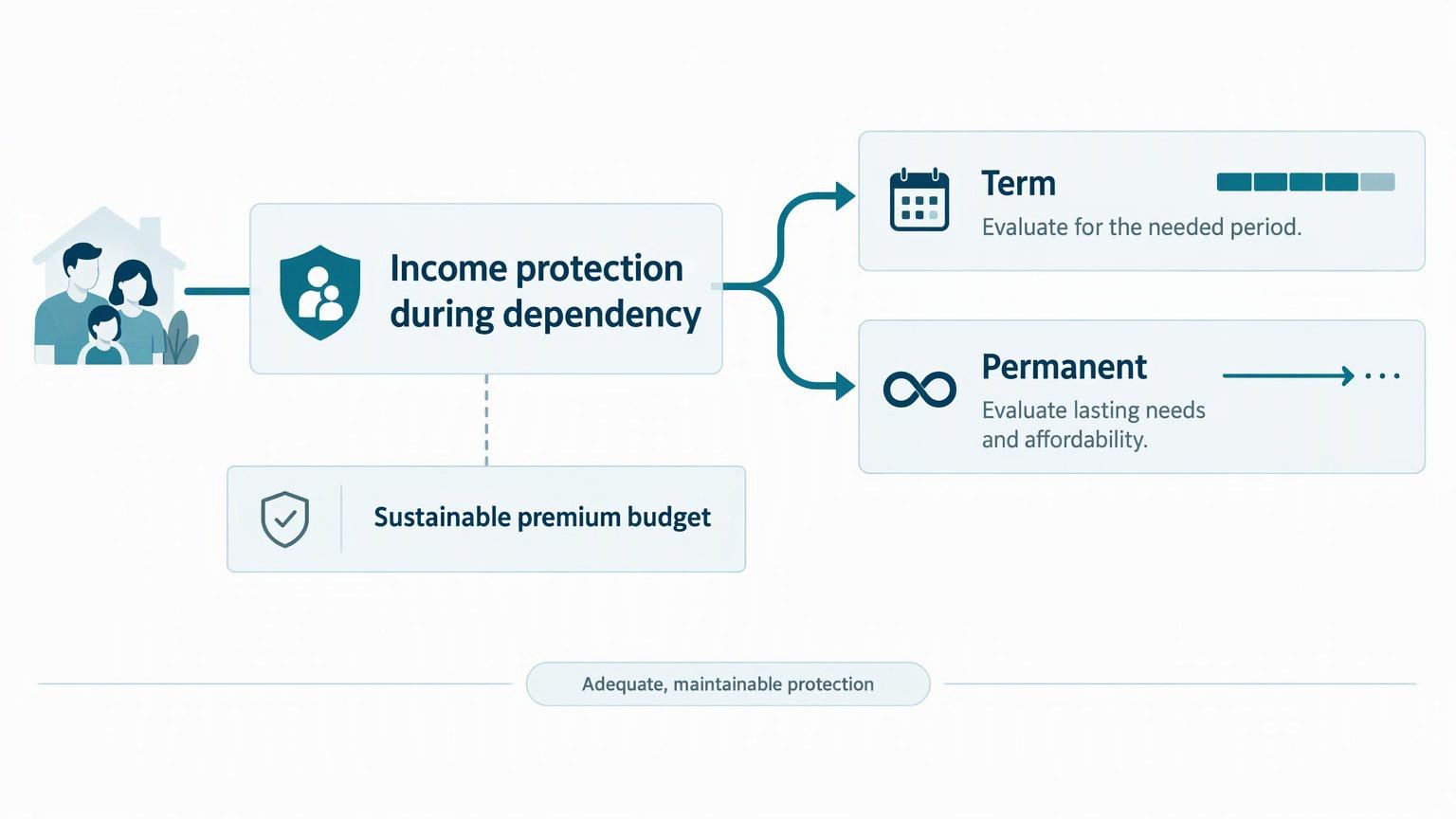
Suppose a family needs income replacement while children remain dependent, has a firm premium ceiling and no identified lifelong coverage need. Compare term coverage for that period with permanent coverage. If permanent premiums would force a smaller death benefit or strain the budget, term is the stronger starting fit. If a lasting obligation emerges and permanent premiums are sustainable, permanent coverage deserves a separate evaluation. The constraint is adequate, maintainable protection, not which illustration looks more impressive.
Discuss the Coverage Trade-Off That Matters to You
Review your protection goal and sustainable premium budget with Rene Farias over Zoom.
What Should Be Clear About Compensation and Ongoing Service?
You should understand how the agent is paid and who handles help after purchase. Commission compensation does not by itself make a recommendation unsuitable, but incentives should not be left unexplained. Ask whether the agent receives commissions, whether compensation differs among proposed options and whether any separate fee applies.
Keep compensation distinct from the contract's costs. Premiums, policy charges, rider costs and surrender charges affect your policy or what you pay; they are not interchangeable with the agent's compensation.
For ongoing service, clarify these responsibilities:
- Who helps with beneficiary changes and policy questions?
- How are coverage reviews arranged when family or business needs change?
- Who helps beneficiaries contact the insurer about a claim?
- What happens to servicing if the agent is no longer available?
An agent may assist with these tasks, but the insurer administers the contract and determines claims under its terms. Choose a service arrangement that explains both the assistance available and the insurer's role.
How Do Rene's Virtual Strategy Sessions Work?
Rene's strategy sessions take place over Zoom. He is based in Los Angeles and helps California families, professionals and business owners compare insurance-based protection and retirement-planning options across multiple carriers.
Prepare privately by identifying your coverage purpose, dependents or business obligations, existing coverage, budget and time horizon. Use those points to frame the conversation: what needs protection, what is already covered and which policy trade-offs matter most. Rene works through your circumstances directly rather than relying only on a generic calculator.
A strategy discussion is not a policy approval or final premium. If you proceed toward an application, underwriting requirements vary by insurer, product, coverage amount and individual circumstances.
For business needs, business succession insurance can inform the funding discussion. Attorneys handle buy-sell documents and estate arrangements; tax advisers address tax implementation, and relevant plan professionals handle retirement-plan administration. Rene's role is insurance guidance, not a substitute for those professionals.
Work With Rene Farias
Rene Farias works with California families, professionals and business owners to compare insurance-based protection and retirement-planning strategies. He is based in Los Angeles and offers strategy sessions over Zoom.
Frequently Asked Questions
Do I Need a Medical Exam to Apply?
Not necessarily. Underwriting requirements vary by carrier, policy type, coverage amount and your circumstances. Some applicants may qualify without an examination; others need additional underwriting. Ask what the proposed application requires, and do not treat a preliminary estimate as an approved offer or final premium.
Should I Cancel My Existing Policy Before Shopping?
No. Keep existing protection in place while evaluating alternatives. Compare the current policy's benefits and costs with the proposed replacement, including any surrender consequences and new underwriting requirements. Before ending coverage, establish whether the replacement has actually taken effect and whether its terms meet the need you intended to cover.
Is Employer-Provided Life Insurance Enough?
It may cover part of your need, but evaluate it against your dependents' expenses, debts and other available resources. Review what happens when employment ends and whether any continuation options apply. An individual policy may address a gap, but the amount should follow your actual obligations rather than a generic salary multiple.
Is Indexed Universal Life an Investment in a Stock Index?
No. Indexed universal life is permanent life insurance, not direct ownership of an index. Crediting depends on policy terms, including applicable caps, participation rates or spreads. A crediting floor does not prevent policy charges, loan costs or surrender charges from reducing cash value. Nonguaranteed illustrated values are not promises.
Can One Policy Cover Family and Business Needs?
Possibly, but those needs should be evaluated separately before combining them. Family income replacement and business buyout funding can involve different owners, beneficiaries and obligations. An insurance advisor can discuss coverage and funding options; an attorney and tax adviser should address the legal arrangements and tax implications of the proposed structure.
Review Whether Rene's Approach Fits Your Coverage Needs
Bring your family or business protection question to a Zoom strategy session with Rene Farias. Discuss the available insurance options and decide which trade-offs deserve closer review before applying.