
Pension vs 401(k): Which Is Better for California Business Owners?
A 401(k) is usually the better starting point when your California business needs funding flexibility and employee-directed savings. A defined benefit pension deserves evaluation when you can sustain actuarially determined contributions and want a formula-based retirement benefit. Some businesses can maintain both, but employee costs and administration must fit.
As an owner, you make this decision from both sides: you want retirement savings for yourself, and your business must support the arrangement for eligible employees. Separate the benefit you want from the employer commitment required to provide it. Then compare designs using your workforce, compensation and cash flow.
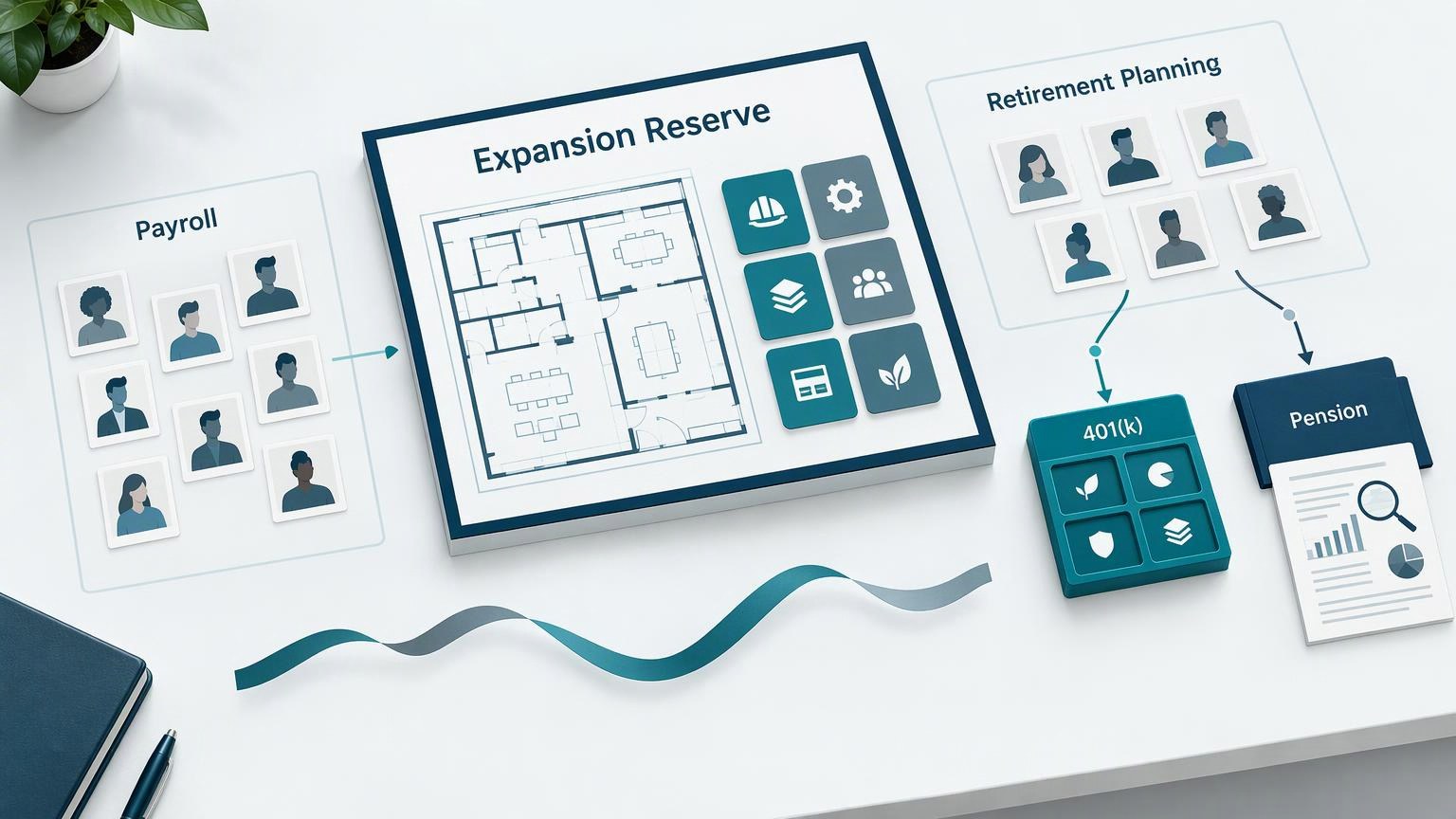
Key Considerations
- Pension investment shortfalls can increase employer funding needs; 401(k) losses generally reduce participant account values.
- Employee costs and weaker-year cash flow matter more than an owner's preferred contribution target.
- The 2026 pension limit measures an annual retirement benefit, not an annual deposit or guaranteed deduction.
A Pension Promises a Benefit; a 401(k) Builds an Account
A defined benefit pension promises a retirement benefit calculated under the plan's formula. A 401(k), a defined contribution plan, provides an individual account whose value depends on contributions, investment results and fees.
A traditional pension formula commonly considers compensation and years of service. The promised benefit is not simply whatever the investments happen to be worth at retirement. With a 401(k), employees elect salary deferrals, and the employer may provide matching or other contributions under the plan's terms.
Cash balance plans are also defined benefit pensions, even though they describe benefits through hypothetical account balances. That account-style presentation does not turn them into 401(k)s.
Roth versus pretax is a separate tax-treatment decision. A Roth feature does not change a 401(k) into a pension, and a Roth IRA is not an employer 401(k).
The Employer Bears Pension Funding Risk
The employer generally makes most pension contributions and must meet applicable funding requirements. In a 401(k), investment losses generally reduce the participant's account rather than create an employer obligation to restore its value.
For a pension, an enrolled actuary determines funding levels. Poor investment results can increase future funding needs because the plan still owes formula-based benefits. The IRS defined benefit plan guidance identifies actuarial involvement, annual reporting and potential excise taxes when minimum contribution requirements are not met.
A 401(k) is not obligation-free. The employer must administer the plan and make contributions required by its design. Safe harbor arrangements require employer contributions; discretionary profit-sharing provisions offer a different commitment.
Keep administration costs separate from investment shortfalls. Pension actuarial work is an ongoing service expense. An increased funding requirement is money needed to support benefits. Neither should be confused with fees deducted from a participant's 401(k) account.
| Business Situation | Suitable Starting Point | Reason | Trade-Off |
|---|---|---|---|
| Variable cash flow and priority operating reserves | 401(k) with an affordable employer contribution design | Avoids sponsoring a formula-based pension funding obligation | Required matching or safe harbor contributions still need budgeting |
| Stable recurring cash flow and a substantial retirement-benefit goal | Defined benefit pension evaluation | A formula-based benefit may support the owner's objective | Employee benefits, actuarial work and funding risk increase the commitment |
| Existing 401(k) and capacity for additional ongoing obligations | Coordinated pension and 401(k) evaluation | Supports two distinct benefit structures | Combined compliance and costs require professional modeling |
Choose Around Your Workforce and Sustainable Cash Flow
Favor a 401(k) starting point when preserving operating flexibility matters most. Evaluate a pension when recurring cash flow can support funding obligations and the full employee benefit cost is acceptable.
Employee ages, compensation and service affect pension formulas and actuarial calculations. An owner approaching retirement may find a pension worth modeling, but age alone does not establish an affordable contribution. Eligible employee benefits belong in the calculation too. A growing workforce can change the economics of either design.
Compare the cash remaining after payroll, taxes, debt payments and operating reserves, including in a weaker year. A strong current year does not by itself justify a continuing benefit promise.
Hypothetical Example: An Expansion Reserve Comes First
Suppose a California owner approaching retirement wants to accelerate saving, but must preserve cash for a business expansion. Revenue varies, and the workforce includes employees with different ages and compensation.
A pension could support a larger retirement benefit, but its funding requirements might compete with the fixed expansion reserve. A 401(k) with a carefully selected employer contribution structure offers a more manageable starting point, although required contributions still need budgeting.
The reasoned choice is to model the 401(k) first. Reconsider a pension or combination only if an actuary's funding analysis fits the reserve constraint through weaker years. The owner's retirement timeline does not override the business's liquidity needs.
Fit Retirement Saving Around Your Business Priorities
Discuss with Rene Farias how insurance-based protection fits alongside the retirement-plan direction your cash flow can support.
You Can Maintain Both, With Coordinated Design
Yes. A business can maintain a defined benefit pension alongside a 401(k). The combination can provide employee account-based savings and a separate formula-based benefit, but it requires coordinated design rather than simply adding two maximums.
Start with a plan administrator's comparison of a 401(k)-only design and a combined design. Prepare a workforce census, compensation information, existing plan documents and a sustainable funding budget. These inputs let the professionals estimate employee costs and evaluate applicable coverage, nondiscrimination, contribution and deduction rules.
Next, have an enrolled actuary evaluate pension funding and how adverse investment results could affect future contributions. Your tax adviser should assess deductions and business-specific compensation treatment. Legal plan documents and ongoing administration belong with the appropriate plan professionals.
Rene Farias is an independent insurance advisor based in Los Angeles, offering Zoom strategy sessions for California clients. His planning for business owners connects insurance-based protection with long-term goals. His retirement planning and protection work can support discussion of insurance needs alongside a qualified plan, not replace actuarial, tax or legal implementation.
2026 Limits Measure Different Things
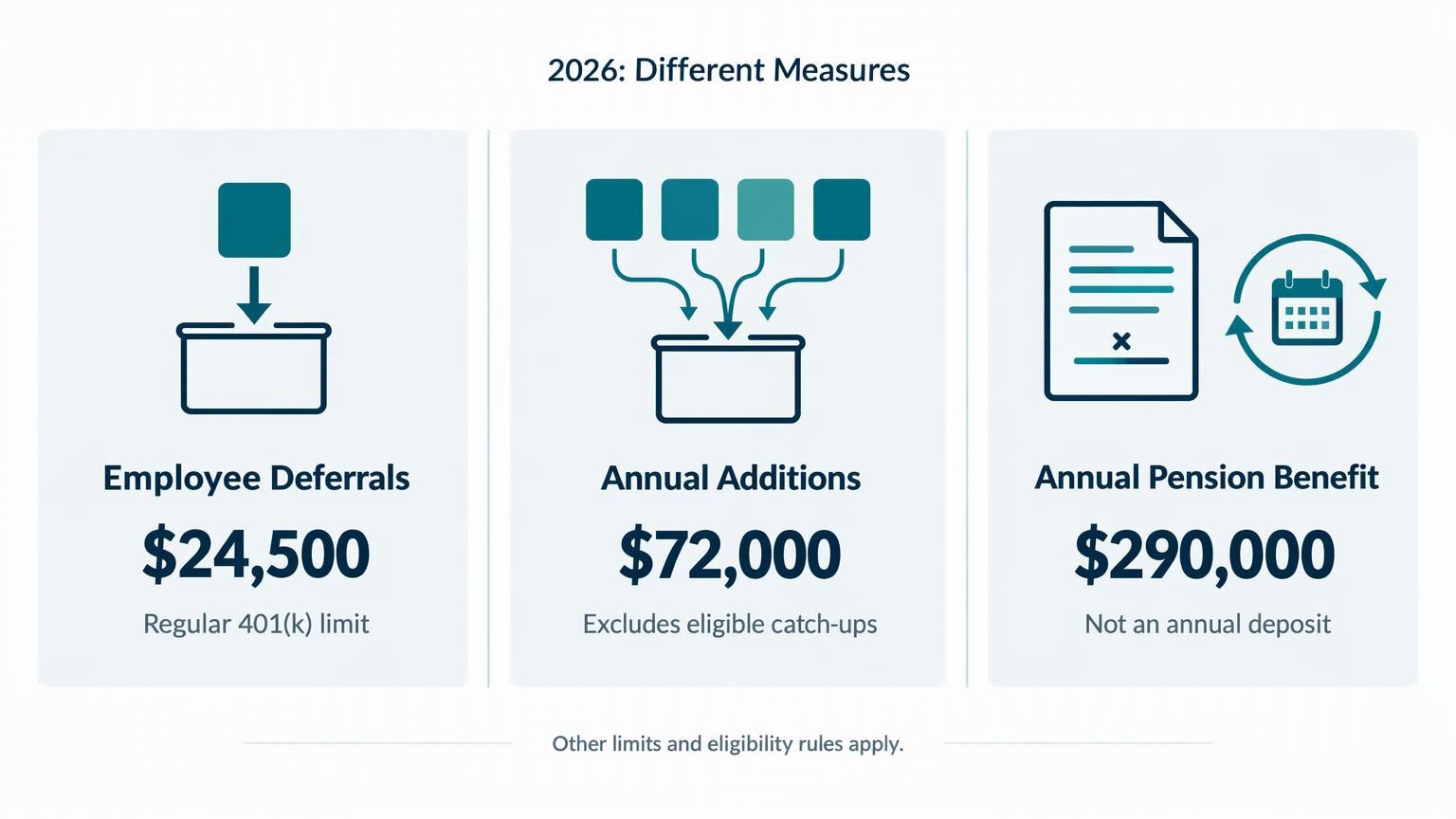
A 401(k) deferral limit measures employee contributions; the defined contribution annual-addition limit measures a broader account allocation. The pension limit measures an annual retirement benefit. They are not interchangeable savings allowances.
IRS Notice 2025-67 establishes these 2026 amounts:
- $24,500: the regular employee elective-deferral limit for a 401(k).
- $8,000: the general catch-up limit for eligible participants age 50 or older. For those attaining ages 60 through 63, the higher catch-up is $11,250 instead.
- $72,000: the defined contribution annual-addition dollar ceiling, covering employer contributions, regular employee contributions and forfeitures, excluding eligible catch-ups. Compensation limits also apply.
- $290,000: the defined benefit annual-benefit dollar ceiling, subject to other applicable limits and adjustments.
The pension figure is not permission to deposit or deduct that amount each year. Your funding requirement depends on the benefit formula, participant circumstances, assets and actuarial calculations. Likewise, a 401(k)'s annual-addition ceiling does not mean the owner may personally defer that entire amount from salary.
Work With Rene Farias
Rene Farias works with California families, professionals and business owners to compare insurance-based protection and retirement-planning strategies. He is based in Los Angeles and offers strategy sessions over Zoom.
Frequently Asked Questions
Does Every Pension Pay Only Monthly Income?
No. A traditional pension commonly describes a monthly retirement benefit, but payment options depend on the plan. Cash balance pensions are more likely to offer lump-sum distributions. Review the plan's benefit and distribution provisions rather than assuming the word pension determines how you will receive the money.
Can I Reduce Pension Benefits After a Slow Business Year?
You cannot retroactively decrease pension benefits already accrued. A prospective change or freeze requires professional analysis and does not automatically remove existing funding obligations. Treat a slowdown as a funding and plan-design issue, not as permission to reverse benefits employees have already earned under the plan.
Is a Pension Available Only to Large Employers?
No. The IRS allows a business of any size to establish a defined benefit plan. Size alone does not establish suitability, however. A small employer still needs an affordable benefit design, actuarial funding analysis and administration. Compare those obligations with the owner's goals before choosing a pension.
Does Owning a Business Automatically Qualify Me for a Solo Plan?
No. Business ownership alone does not establish solo-plan eligibility. Employee coverage and the business's employment circumstances matter. Before using an owner-only projection, have a plan professional determine who must be included. Otherwise, the projected owner contribution may omit employee obligations that materially change the plan's cost.
Can I Calculate My Contribution From Gross Business Revenue?
No. Revenue is not the same as compensation recognized for retirement-plan purposes. Entity structure and applicable compensation rules matter, and S-corporation distributions are not W-2 wages. Have your tax adviser and plan professional identify the relevant compensation before estimating contributions, deductions or benefits for the owner.
Connect Your Plan Choice With Your Protection Needs
Once you have a likely plan direction, use a Zoom strategy session with Rene Farias to discuss the insurance-based protection and retirement-income questions that remain. Keep employer-plan design and funding calculations with your plan professionals.