
Wealth Transfer Strategies for California Families: Complete Guide
Start wealth transfer planning by matching each asset's ownership and transfer instructions to your family's goals. Then assess cash needs, gifting and trust arrangements together. Life insurance may address a liquidity shortfall, while an estate attorney and tax adviser handle legal structures and tax decisions that insurance alone cannot resolve.
A family can have substantial wealth without an easy inheritance transition. A business may be difficult to divide, a recipient may need managed support, or cash may sit outside the estate that must pay expenses. The useful starting point is the intended outcome, not a particular policy or trust.
Key Considerations
- Map each asset's transfer instructions before relying on your will.
- Match liquidity to the person or entity that must pay the expense.
- Separate annual gifting from the shared lifetime estate-and-gift exclusion.
Which Assets Transfer by Beneficiary Designation Rather Than a Will?
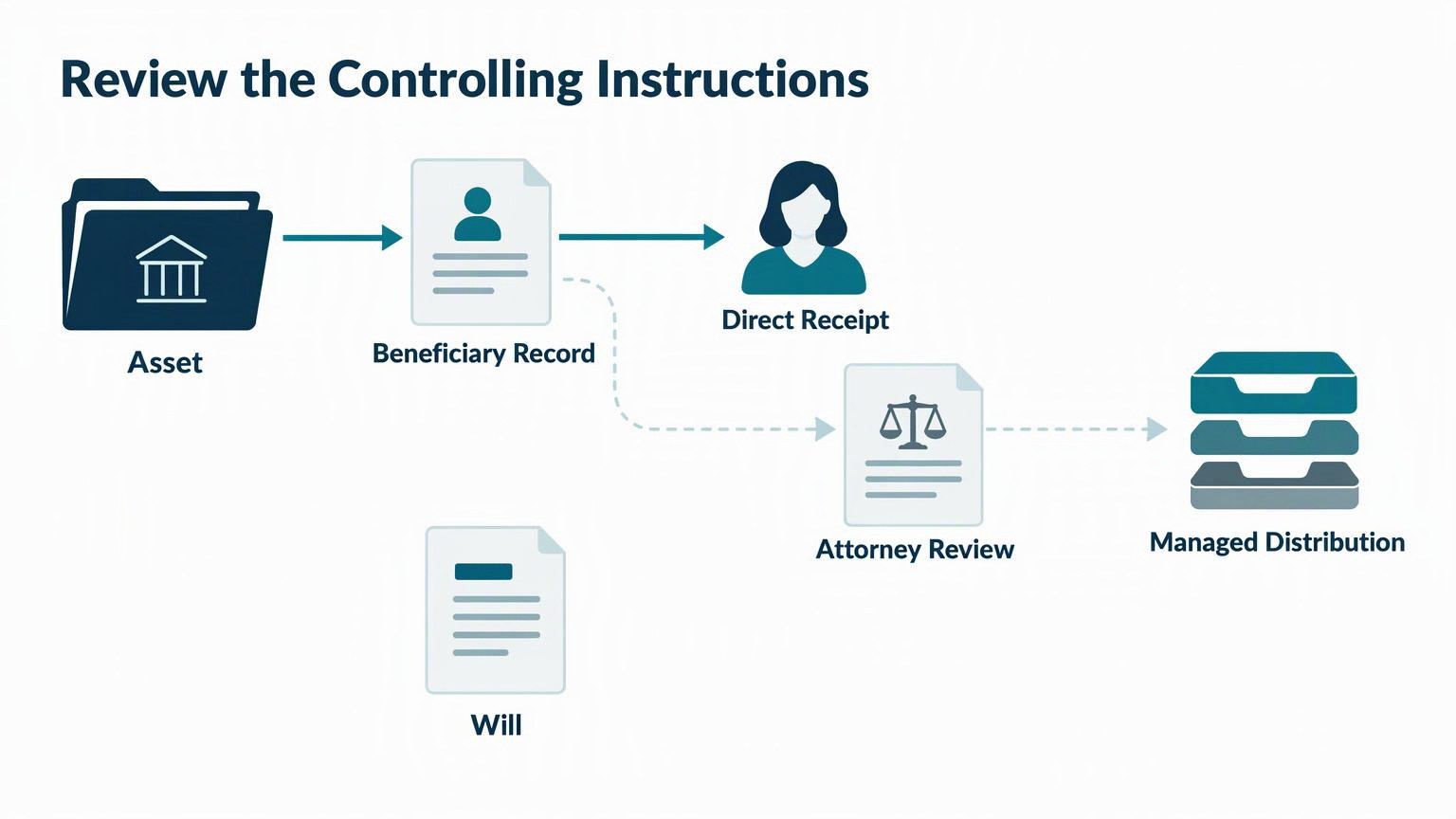
Life insurance payable to a named beneficiary follows the policy's beneficiary instructions. For retirement accounts, annuities and accounts offering payable-on-death or transfer-on-death arrangements, identify the applicable beneficiary provision in the governing documents. Do not assume a sentence in your will updates those records.
Create a transfer map showing the asset, owner, intended recipient and controlling document. Retrieve the current designation from the insurer, custodian or plan administrator rather than relying on an old application. Include backup recipients and identify any account without a completed designation.
The key choice is direct receipt versus managed distribution. Direct receipt may fit an adult who should control the asset outright. If your goal is staged support or ongoing oversight, have an estate attorney evaluate an appropriate trust arrangement before changing designations. Retirement-account and spousal requirements need account-specific review; a trust is not automatically the better beneficiary for every asset.
What Role Can Life Insurance Play in Estate Liquidity?
Life insurance can provide death-benefit cash when a family's wealth is tied up in assets it wants to retain. First estimate obligations and available cash. Existing reserves may be sufficient; insurance becomes relevant when a remaining shortfall justifies the coverage and ongoing premium commitment.
The IRS explains that death proceeds are generally excluded from a beneficiary's gross income, but interest is taxable and transfers for valuable consideration can limit the exclusion. This income-tax treatment does not settle estate inclusion.
Rene's California life insurance guidance can help you compare coverage against the purpose and funding horizon.
Hypothetical Example: Preserve the Business Without Overlooking Cash
Suppose a California family wants an operating child to retain the business and another child to receive other assets. Its fixed constraint is avoiding a business sale to meet family obligations. Selling assets conflicts with that goal; adequate reserves could solve it without new insurance. If reserves are insufficient, insurance merits comparison. But proceeds paid directly to the nonoperating child do not automatically fund estate expenses. The attorney must align the recipient and funding arrangement with the actual cash need.
| Approach | Suitable When | Trade-Off |
|---|---|---|
| Direct beneficiary designation | The recipient should receive and control the proceeds outright. | Does not provide the ongoing distribution management you may want. |
| Attorney-designed trust arrangement | You need managed distributions or coordinated ownership instructions. | Requires legal design, implementation and administration. |
| Existing liquid reserves | Available cash can meet obligations without selling retained assets. | Those reserves remain committed to the funding need. |
| Life insurance funding | A death-related cash shortfall remains. | Requires premiums and appropriate ownership and beneficiary structure. |
| Lifetime gifting | You can relinquish assets now without compromising your own needs. | Requires consideration of control, valuation and tax reporting. |
Size the Liquidity Need Before Choosing Coverage
Discuss the obligations you want insurance to fund, existing cash resources and the coverage horizon with Rene Farias over Zoom.

When Can an ILIT Be Relevant?
An irrevocable life insurance trust, or ILIT, can be relevant when insurance ownership, estate inclusion and control over distributions need coordinated legal planning. It is not a default requirement merely because your family owns life insurance.
Under Section 2042, insurance receivable by the executor is included in the gross estate. Proceeds payable to others can also be included when the insured retained incidents of ownership. Naming children as beneficiaries therefore does not by itself remove the proceeds from the insured's estate.
An attorney-led ILIT review weighs the potential estate-planning benefit against reduced personal control and trust administration. Funding and gift-tax treatment also need tax review. Transferring an existing policy requires particular care: Section 2035 can bring affected proceeds back into the estate when a relevant ownership transfer occurs within three years of death. Do not treat a policy transfer as an immediate tax solution.
How Do Estate and Annual-Gift Exclusions Differ?
The annual gift exclusion applies to qualifying gifts during a calendar year. The federal basic exclusion operates across lifetime taxable gifts and transfers at death; it is not a fresh allowance for each transaction.
The IRS gift-tax guidance lists a $19,000 annual exclusion per donor, per recipient for 2026 and a $15 million federal basic exclusion per individual for 2026. Prior taxable gifts matter when evaluating the remaining basic exclusion. A gift above the annual exclusion can require reporting without necessarily producing an immediate tax payment.
Gifting suits families ready to give up the transferred property now. Retaining assets may be preferable when you still need them for retirement, care or business operations. For trust gifts or business interests, have a tax adviser determine valuation, exclusion eligibility and reporting before transferring ownership. The size of an exclusion does not establish that every family owes estate tax or that every gift is tax-efficient.
What Should You Review After a Family or Business Change?
Review the changed relationship or ownership interest first, then update the documents and financial arrangements that implement your new intentions. Updating only the will leaves the rest of the plan unresolved.
- Marriage or divorce: Review recipients, ownership, spousal rights and any legal obligations before altering coverage.
- Birth: Review support goals, backup recipients and whether inheritance management is needed.
- Business change: Review ownership, valuation, buy-sell documents and the owner and beneficiary of related insurance.
Begin with your transfer map and a current cash-needs assessment. Your estate attorney should resolve legal instructions; your tax adviser should assess gifts and tax consequences. Submit account changes through the relevant administrator and retain confirmation.
Rene Farias is an independent insurance advisor based in Los Angeles, offering strategy sessions over Zoom. He works with multiple carriers to compare insurance-based options. His business succession insurance guidance addresses funding considerations; the buy-sell agreement itself requires attorney-led work. Complete the review by checking that approved ownership and beneficiary instructions were actually recorded.
Work With Rene Farias
Rene Farias works with California families, professionals and business owners to compare insurance-based protection and retirement-planning strategies. He is based in Los Angeles and offers strategy sessions over Zoom.
Frequently Asked Questions
Does Avoiding Probate Mean Avoiding Estate Tax?
No. The route an asset takes to its recipient and its inclusion in the federal gross estate are separate questions. Insurance payable to someone other than the executor can still be included because of retained ownership rights. Have your attorney evaluate both issues rather than treating one as proof of the other.
Should Each Child Receive the Same Kind of Asset?
Not necessarily. Equal treatment may require attention to control, liquidity and responsibilities, not identical assets. An operating business interest and cash can have very different practical consequences. Establish your fairness goal first, then have valuation and legal professionals assess an arrangement that does not unintentionally burden one recipient.
Should I Buy Insurance Before the Legal Plan Is Finished?
You can discuss coverage needs while legal planning proceeds, but coordinate ownership and beneficiary decisions before implementation. An eventual trust or business funding arrangement may require a different structure from a personally owned policy. Coverage comparison and document preparation should inform each other rather than proceed as unrelated purchases.
What If My Family Has Connections Outside the United States?
Obtain specialized tax and estate advice before applying domestic exclusion assumptions. Citizenship, residence and the location of assets can affect the review. Prepare an inventory of those connections for your advisers, and coordinate any insurance decision with their analysis rather than assuming California residence answers every transfer-tax question.
How Can I Make the Plan Easier for My Family to Use?
Keep an organized record of policies, accounts, controlling documents and professional contacts. Explain who should take responsibility for the next steps, without circulating sensitive account information unnecessarily. A usable record helps your family locate instructions and identify the insurer, administrator or adviser responsible for each asset.
Review the Insurance Funding Gap in Your Legacy Plan
Bring your transfer goals and cash-needs questions to a Zoom strategy session with Rene Farias. Focus the discussion on whether existing coverage fits your family or business plan and which ownership decisions need coordination with your attorney and tax adviser.