
What Is a Tax-Free Retirement Account (TFRA)? 2026 Guide
A tax-free retirement account, or TFRA, describes a strategy using cash-value permanent life insurance, often whole life or indexed universal life. It is not a separate IRS account type. It can supplement retirement saving when you need lasting protection, can sustain premiums and design access around applicable tax and policy rules.
For California families, professionals and business owners, separate emergency reserves, retirement investments and lasting protection. Evaluate a TFRA proposal by identifying what its death benefit, cash value and access plan each accomplish.
Key Considerations
- Roth saving and permanent insurance serve distinct purposes and can work together.
- Compare whole life's contractual schedules with IUL's crediting and funding features.
- Establish non-MEC funding limits, then monitor coverage and retirement borrowing.
How Does a TFRA Strategy Compare With a Roth IRA?
Favor a Roth IRA for retirement saving without an insurance requirement, subject to eligibility. Consider permanent insurance alongside it for lasting protection and sustained funding. Term coverage plus separate saving may better fit temporary protection.
The IRS explains Roth IRA rules: contributions are nondeductible, income and contribution limits apply, and qualified distributions are tax-free. Regular contributions generally avoid withdrawal tax and penalties; conversions and earnings follow different rules. Qualified earnings require the applicable five-year period and a qualifying event, such as age 59½.
Policy premiums fund coverage and cash value, with access governed by the contract. Both approaches compete for your saving budget.
What Do Whole Life and IUL Offer?
Whole life offers contractual premium and guaranteed-value schedules. IUL offers fixed or index-linked crediting choices. Both provide permanent protection with potential supplemental cash-value access.
Whole Life: Scheduled Funding and Design Options
Limited-pay whole life finishes required premiums on a contractual schedule. Blended designs can combine whole life, term coverage and paid-up additions, which purchase additional permanent coverage and cash value.
MassMutual's rider explanation describes term and paid-up-addition riders; availability and payment limits depend on policy and state. Guaranteed values differ from nonguaranteed dividends. A projected dividend premium offset is not contractually paid-up status, and base premiums are not freely adjustable.
IUL: Crediting Choices and Coverage Conditions
IUL uses crediting formulas, not direct index ownership. Caps, participation rates and spreads may change within contract terms. A crediting floor does not stop charges, loan costs or surrender charges from reducing value.
Nationwide's IUL Protector II guide illustrates conditional no-lapse protection. Evaluate its duration and funding requirements separately from projected values. Planned premiums, no-lapse premiums and actual charges differ. Guarantees depend on the insurer's contract and claims-paying ability, not bank-deposit insurance.
| Approach | Suitable When | Access and Trade-Off |
|---|---|---|
| Roth IRA | Retirement saving is your priority; contribution requirements are met. | Contribution and earnings withdrawal rules differ; no owner loans or insurance requirement. |
| Term Insurance Plus Separate Saving | Protection is temporary or your savings budget varies. | Separate protection and saving; term coverage builds no cash value. |
| Permanent Insurance Strategy | Lasting protection and sustainable cash-value funding are priorities. | Withdrawals and interest-bearing loans may support spending but affect remaining benefits. |
How Do Withdrawals and Policy Loans Provide Access?
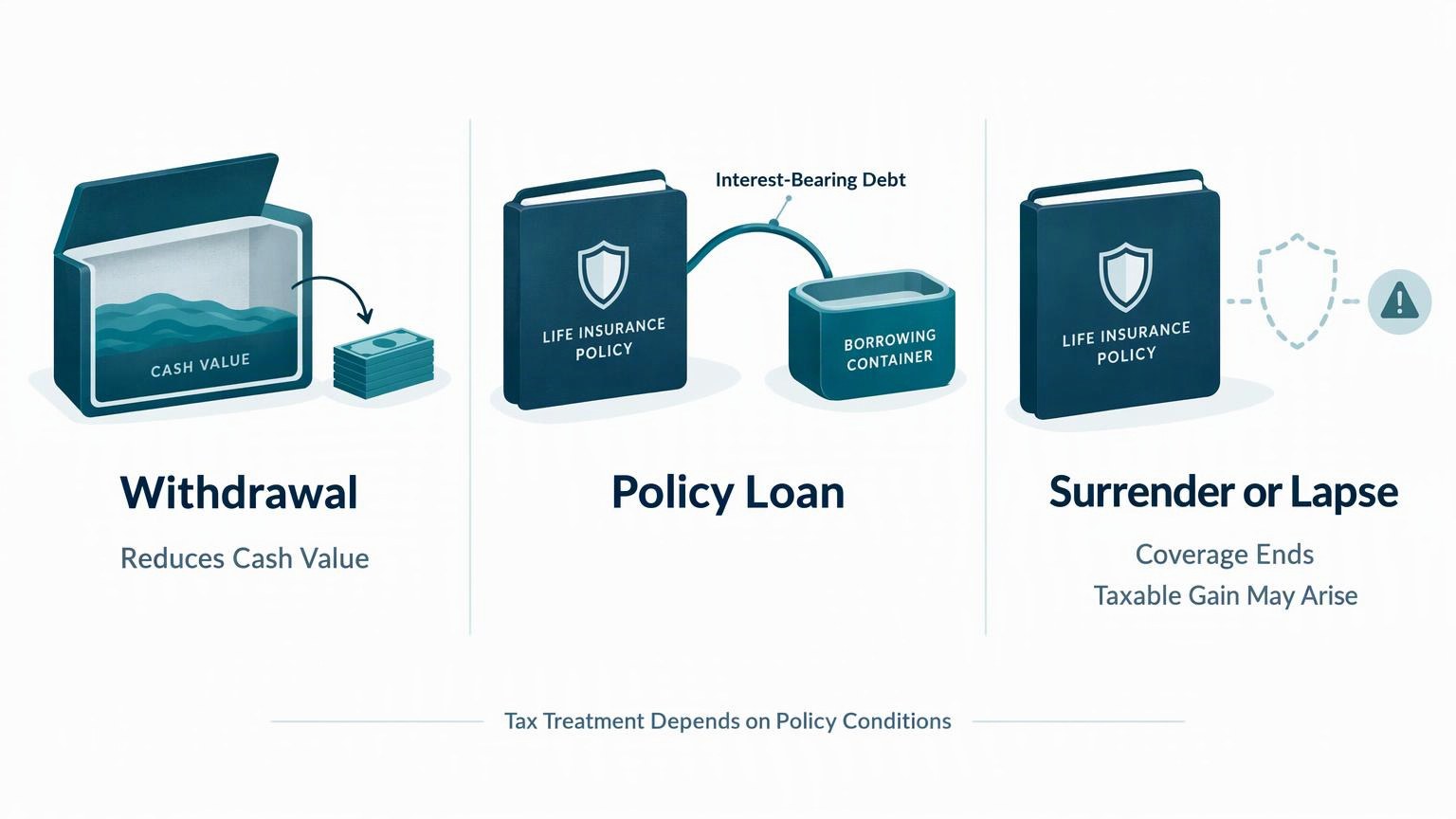
Withdrawals remove policy value; loans create debt. Policy cash value, sometimes labeled account value, supports access while coverage remains in force. Cash surrender value is the exit amount after applicable surrender charges and outstanding debt, not the death benefit. Where the contract specifies a finite surrender-charge period, that deduction declines or ends on its schedule; added coverage may have a new surrender period. Use the contract's surrender values, rather than account values alone, to evaluate an early exit.
Basis withdrawals: Qualifying non-MEC withdrawals generally recover premiums paid, adjusted for prior tax-free receipts, before taxable gains, subject to exceptions. They may reduce coverage.
Policy loans: Qualifying non-MEC loans generally are not immediately taxable. Interest-bearing debt reduces available value and net beneficiary benefits.
Surrender or lapse: Ending coverage can create taxable gain even when outstanding debt leaves little cash payable. Review the TFRA strategy disclosures and monitor remaining value, interest, charges and coverage throughout an income-access plan.
What Does Non-MEC Funding Require?
Non-MEC design seeks favorable access treatment while building value. Funding must fit insured benefits and tax tests.
Under Internal Revenue Code Section 7702A, the seven-pay test compares cumulative premiums with policy-specific limits. Certain benefit reductions or material changes require recalculation or new testing, even after scheduled payments finish.
A modified endowment contract remains life insurance, but distributions generally become gain-first, including loans. Taxable amounts may incur additional federal tax before the applicable age threshold unless an exception applies.
Obtain current insurer funding limits and tax-status assessment before extra premiums or coverage changes. No-lapse requirements address coverage, not non-MEC status.
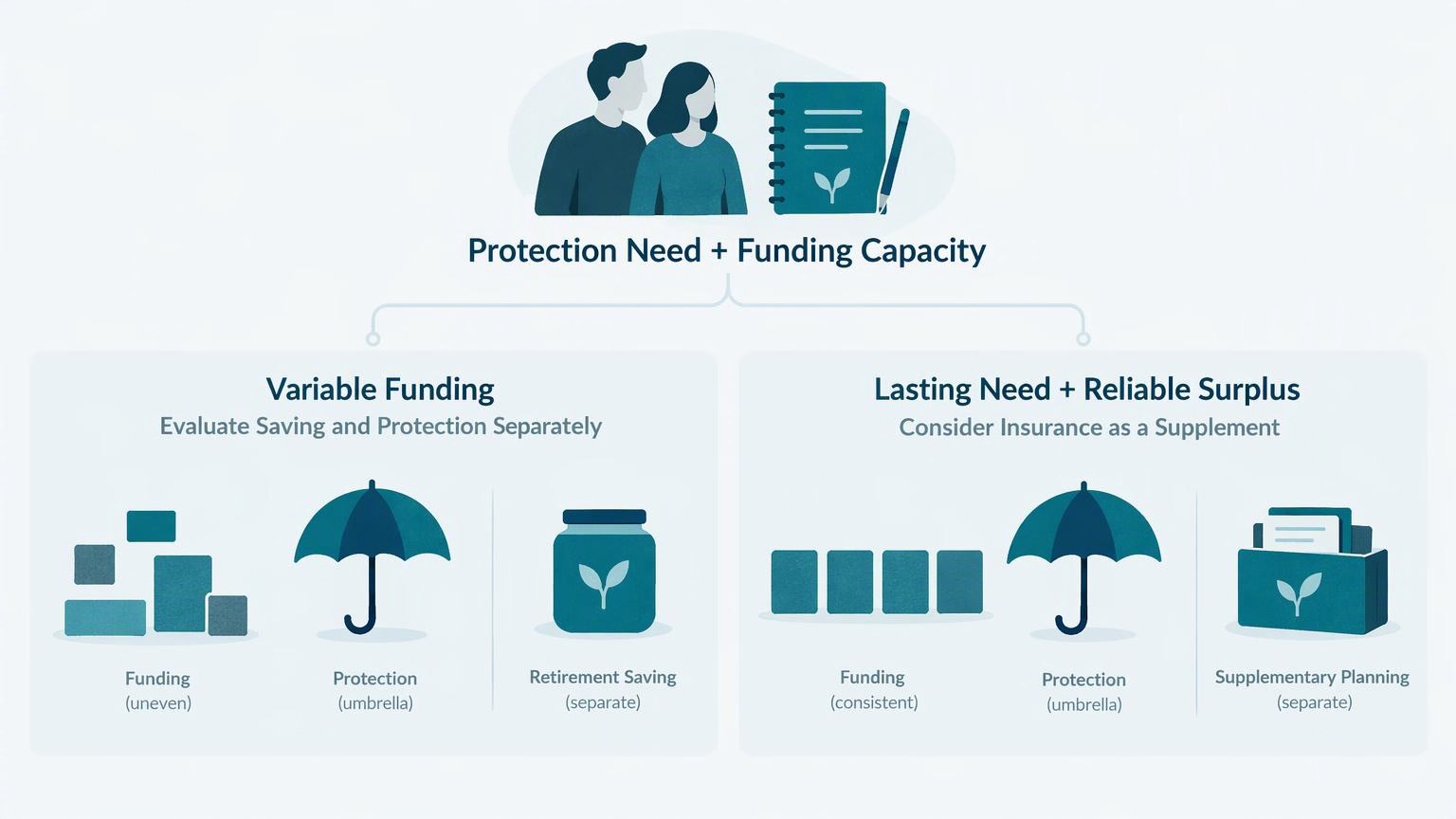
How Does an Uncertain Premium Budget Change the Choice?
Uncertain funding favors separating protection from saving unless permanent-policy premiums remain affordable.
Hypothetical situation: A California professional wants family protection, supplemental retirement funds and premiums finished before retirement. Variable earnings make preserving emergency reserves the constraint.
Term coverage plus separate saving allows variable savings contributions. Limited-pay whole life supplies a contractual premium endpoint but requires an affordable lean-year schedule. IUL may permit adjustments, but reduced payments affect value and coverage conditions.
Evaluate separate protection and saving first. Permanent designs merit comparison if protection needs are lasting and reliable surplus supports funding.
Match the Premium Schedule to Your Budget
Discuss your lasting coverage needs and lean-year funding capacity with Rene Farias before comparing permanent-policy designs.
Work With Rene Farias to Evaluate the Design
Rene Farias is an independent insurance advisor based in Los Angeles, serving California families, professionals and business owners through Zoom strategy sessions. Work backward from the protection and supplemental access you want to a policy structure your budget can sustain:
- Define the outcomes. Identify the beneficiary protection you need to preserve, when supplemental access might begin and how much spending you hope it will support. Keep emergency reserves and other retirement saving separate from the premium budget.
- Set affordable funding. Establish a premium amount and payment period that remain manageable in lean years. Compare whole life, limited-pay or blended designs and IUL against those same goals, rather than selecting the largest illustrated income.
- Match the structure to the goals. Compare guaranteed schedules and nonguaranteed illustrations, including how planned withdrawals or loans affect remaining beneficiary benefits. Test reduced funding and less favorable crediting to see whether premiums, access timing or the income goal would need to change.
- Verify carrier boundaries. Before funding, obtain the insurer's policy-specific premium limits and MEC assessment. Separate coverage requirements from tax-funding limits, and have extra premiums or benefit changes assessed before making them.
- Monitor actual results. Review annual statements and updated in-force illustrations against the plan, including premiums, cash and surrender values, loan interest and remaining coverage. If results fall short, evaluate affordable additional funding, reduced or delayed access, or a revised protection goal before implementing changes.
The California life insurance guide adds protection context. Rene provides insurance comparison and design guidance; your tax adviser evaluates individual tax consequences.
Work With Rene Farias
Rene Farias works with California families, professionals and business owners to compare insurance-based protection and retirement-planning strategies. He is based in Los Angeles and offers strategy sessions over Zoom.
Frequently Asked Questions
Is LIRP a Different Product From TFRA?
LIRP means life insurance retirement plan. Like TFRA, it is a strategy label, not a separate IRS account type. Either may describe whole life or IUL planning. Compare actual contracts and intended uses, since different labels can describe similar proposals.
Can I Use a Policy I Already Own?
Possibly. Review its current in-force illustration, tax basis, loan balance, premium obligations and MEC status. Current values may differ from the original illustration. Compare keeping or adjusting the existing policy before considering replacement; a new contract is not automatically necessary.
Does a TFRA Provide Guaranteed Lifetime Income?
The label does not guarantee lifetime payments. Planned whole life or IUL withdrawals and loans are access strategies, not automatically contractual lifetime-income benefits. If dependable lifetime income is your priority, identify the contract that actually promises payments and its governing conditions.
Are TFRA Premiums Deductible for Business Owners?
A business or retirement-planning label does not make personal life insurance premiums deductible or turn them into qualified-plan contributions. Your tax adviser should review ownership, beneficiaries and business purpose before you claim a deduction or adopt an employer-funded insurance arrangement.
Does Cash-Value Access Replace Long-Term Care Coverage?
No. Borrowing cash value is not a long-term care insurance claim. Care or accelerated-benefit riders have specific triggers and limits. Accelerating benefits reduces that policy's remaining death benefit and may affect cash values. Evaluate dedicated care coverage separately from existing legacy insurance when funding care is the goal.
Define the Job Your Insurance Must Do
Bring an existing policy statement or proposal to a strategy session with Rene Farias. Compare its design with your protection goal, preferred premium schedule and intended retirement access before committing funds.