
What Is Indexed Universal Life (IUL) Insurance? Complete Guide
Indexed universal life, or IUL, is permanent life insurance combining death benefit protection with potential index-linked cash-value growth, without direct stock-market ownership. It can suit lasting coverage and supplemental savings goals when funding is sustainable. Premium flexibility, coverage guarantees and accessible cash depend on the policy's design and terms.
Start with your protection goal, then distinguish contractual promises from illustrated projections. Understanding policy accounting, funding choices and access terms helps you evaluate an IUL design beyond its projected balance.
Key Considerations
- Choose coverage duration and funding structure before comparing projected cash values.
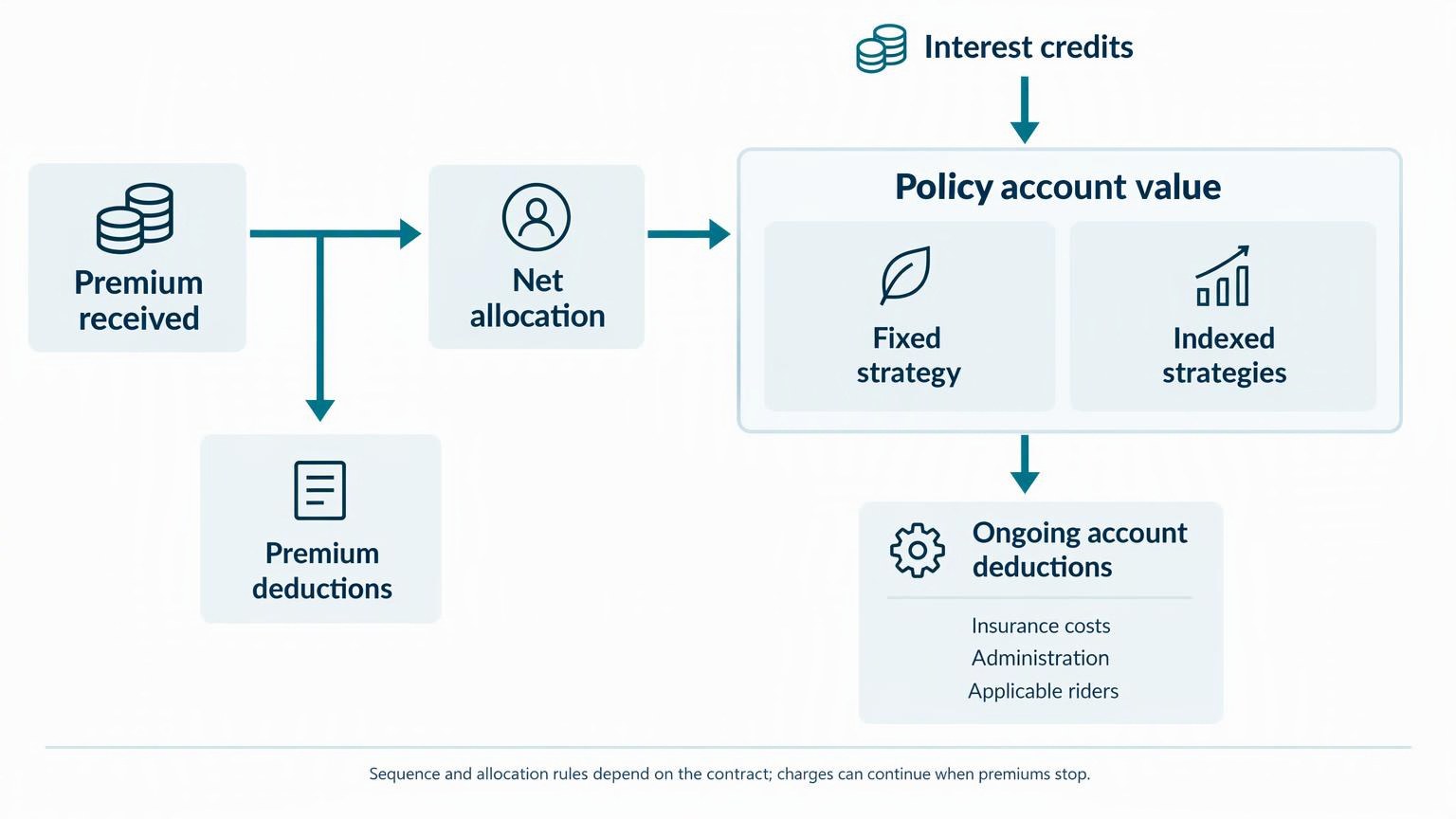
- Premium deductions and ongoing account charges are separate parts of policy accounting.
- Account value, surrender proceeds and the beneficiary's death benefit are different amounts.
When Does IUL Fit Better Than Term or Whole Life?
Consider IUL for lasting protection with index-linked growth potential and adjustable funding. Choose term for temporary protection without cash accumulation, or whole life for structured premiums and contractual values.
Limited-pay whole life offers a scheduled payment endpoint. The MassMutual Whole Life 10 Pay illustration specifies 10 years of base premiums; rider periods differ. MassMutual's rider explanation also describes blended whole-life and term coverage with lower initial premiums than all-whole-life coverage. Paid-up-addition riders can add permanent benefits and cash value through additional premiums, subject to payment limits and terms. These examples do not establish current California availability through Rene.
Hypothetical decision: a household needs income protection while keeping its emergency reserve available. Funding IUL from that reserve conflicts with immediate liquidity needs; retaining it separately and buying term better meets the constraint. Evaluate permanent coverage separately for lasting needs. The California life insurance overview provides broader coverage context.
| Approach | Suitable Goal | Main Trade-Off |
|---|---|---|
| Term life | Protection for a defined period | No cash value; later coverage needs separate planning. |
| IUL | Lasting protection with index-linked cash-value potential | Flexible funding requires attention to charges, crediting and coverage conditions. |
| Whole life | Permanent protection with contractual values and structured or limited-pay funding. | Scheduled premiums must be met; guaranteed values differ from nonguaranteed dividends. |
What Do Index Caps, Participation Rates and Floors Mean?
Indexed strategies credit interest without direct index ownership. Insurers back contractual guarantees and purchase limited indexed exposure through hedges. Allianz's explanation describes purchasing hedges across groups of policies. Hedge costs and a limited budget constrain the upside: your credit follows applicable cap, participation and spread terms, not full stock-index returns. National Life's indexing explanation identifies caps and participation rates as a trade-off for downside crediting protection. No universal premium-allocation percentage applies.
- Cap: limits credited interest.
- Participation rate: determines the share of measured index change used.
- Spread: subtracts an amount under the formula.
- Floor: sets the minimum index credit.
A floor can prevent a negative index credit, but charges can still reduce account value. Compare current terms with contractual boundaries: nonguaranteed caps, participation rates and spreads may change within them. Illustrated rates are not promised returns.
How Do Funding and Death Benefit Choices Shape the Policy?
Funding and death benefit options let IUL emphasize protection, accumulation or both. Planned premiums support an illustrated outcome, not a guarantee.
In a financially difficult year, you may be able to reduce a planned premium when account values or applicable no-lapse tests support coverage. Before changing payments, have the carrier review payment timing and future coverage and cash-value effects. There is no universal minimum premium.
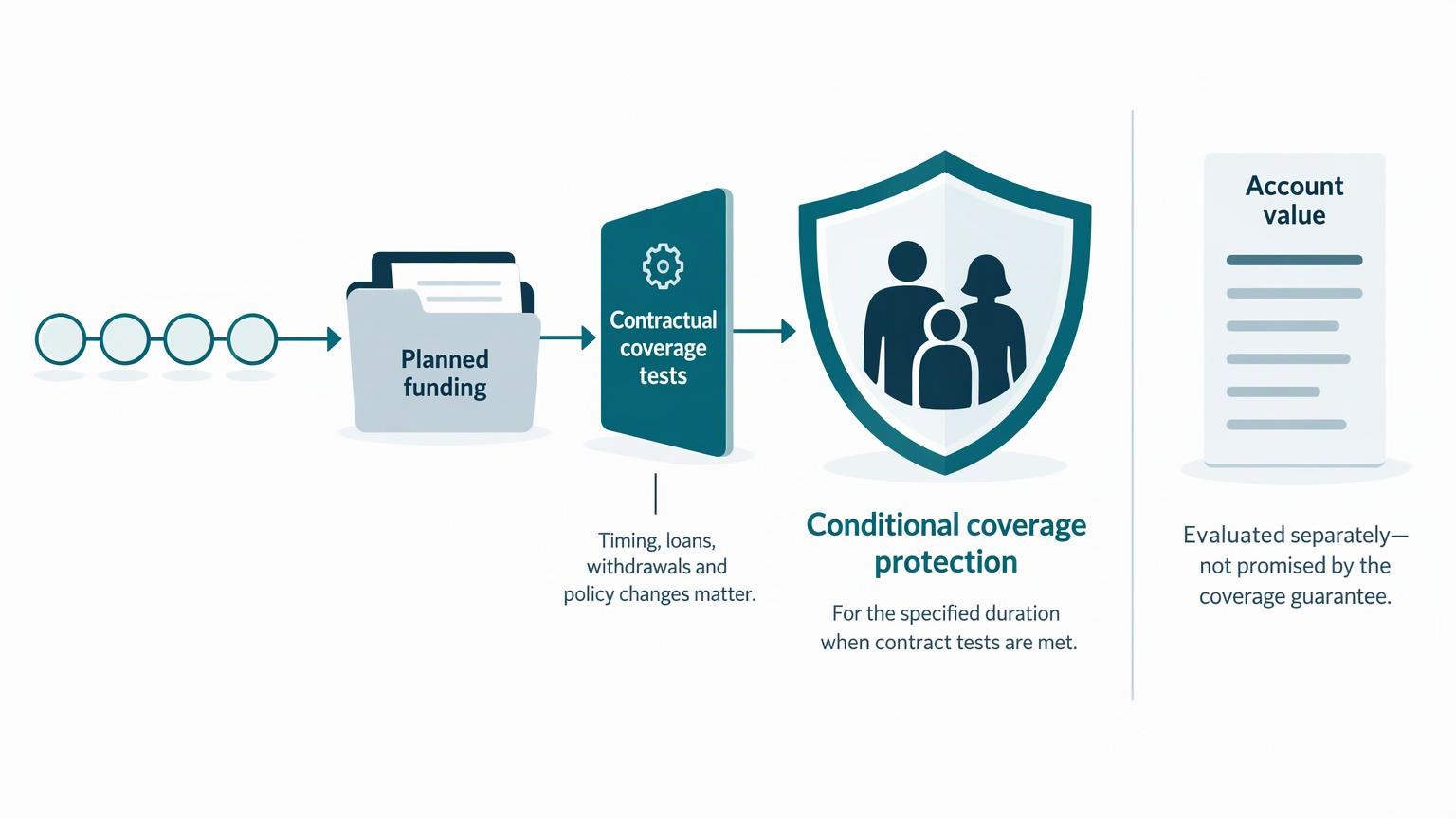
An included no-lapse provision can preserve coverage if contractual tests are met. Identify its guaranteed end age or policy year and required payment amounts and timing in the actual policy form and illustration. Compare that endpoint with your needed coverage duration, separately from projected cash values. Payment timing, loans, withdrawals and changes can affect the tests. No-lapse protection guarantees qualifying coverage, not cash value or an unrestricted premium holiday; lifetime protection is not universal.
A level death benefit generally does not add account value to the stated benefit. An increasing option generally combines both under the policy formula. Definitions, required minimum benefits and insurance costs depend on the form. Select the beneficiary outcome separately from projected cash, then evaluate the funding needed to support it.
Compare Protection and Cash-Value Priorities
Discuss whether your goal calls for IUL, term or another permanent design with Rene Farias over Zoom.
How Can You Access Cash Value or End the Policy?
Withdrawals and loans provide cash access; surrender ends coverage. Account value is the balance, while surrender proceeds reflect charges, debt and adjustments. Surrender schedules expire, but ongoing charges continue; added coverage may start another schedule.
Nationwide's historical Surrender Value Enhancement Rider waives some or all surrender charges, with monthly costs, issue-only election and eligibility conditions. It enhances full surrender only, not loans or partial withdrawals, and does not establish current California availability through Rene.
Under Section 72, qualifying non-MEC withdrawals generally recover basis first, subject to exceptions. Basis generally equals premiums less prior tax-excluded distributions; excess amounts generally represent taxable gain. Withdrawals reduce values and may reduce benefits. Loans accrue interest and reduce available benefits. Qualifying loans may avoid current income tax, but lapse or surrender with debt can create taxable income without new cash.
A TFRA strategy is supplemental cash-value insurance planning that may use IUL or whole life, not a separate IRS account.
Work With Rene Farias to Evaluate an IUL Design
Work backward from needed protection, affordable funding and desired supplemental access. Rene Farias, an independent insurance advisor based in Los Angeles, works with California clients, compares multiple carriers and holds Zoom strategy sessions.
- Set priorities: define coverage amount, duration and access timing while preserving emergency liquidity.
- Compare designs: evaluate death benefit options and premium schedules, separating no-lapse tests, projected cash and carrier-calculated non-MEC limits.
- Test and monitor: model lower credits, interrupted funding and access. Use annual statements and in-force illustrations to adjust premiums, withdrawals or loans.
Review deductions, current and guaranteed charges, crediting terms, surrender schedules, loans and coverage tests. Compare equivalent protection and payment timing. Guarantees depend on the issuing insurer's claims-paying ability; tax and legal implementation require appropriate professionals.
Work With Rene Farias
Rene Farias works with California families, professionals and business owners to compare insurance-based protection and retirement-planning strategies. He is based in Los Angeles and offers strategy sessions over Zoom.
Frequently Asked Questions
What Is a Modified Endowment Contract?
A MEC receives different distribution tax treatment. Under Section 7702A, carriers calculate 7-pay limits for non-MEC funding; benefit changes can require recalculation. This differs from no-lapse tests and actual charges. MEC withdrawals and loans generally receive earnings-first treatment, with possible additional tax. Have the carrier assess extra premiums or benefit changes beforehand.
How Does IUL Differ From a Roth IRA?
IUL combines insured protection with contractual cash access; a Roth IRA is a retirement account. Roth regular contributions generally come out without tax or penalty; conversions and earnings follow separate rules. Qualified earnings require the applicable five-year period and qualifying event. IUL access depends on values, loan terms, non-MEC status and continued qualifying coverage.
Does IUL Automatically Include Long-Term Care Insurance?
No. Care or accelerated-benefit riders have specified triggers and costs, and payouts may reduce death benefits and surrender value. They are not automatically comprehensive care coverage. Compare them with dedicated long-term care insurance, considering how care benefits affect your existing legacy protection.
Should I Replace an Existing Life Insurance Policy With IUL?
Not merely for a larger projected balance. Compare guaranteed benefits, nonguaranteed values, protection needs, premium timing and surrender costs. Test sustainable funding under lower credits. Replacement should improve the coverage or funding fit, rather than depend solely on optimistic illustrations.
Can I Stop Premiums After Retirement?
Possibly, when values or an applicable coverage provision support the contract. Illustrated payment endpoints are not contractually paid-up insurance. Review remaining charges, coverage tests and planned loans before retirement. Lower credits may require smaller withdrawals or resumed premiums to maintain coverage.
References
- Nationwide IUL Protector II 2020 Product Brochure
- 26 U.S. Code Section 72: Insurance Contract Distribution Rules
- 26 U.S. Code Section 7702A: Modified Endowment Contract Defined
- California Department of Insurance: Life Insurance Guide
- Life Insurance Illustrations
- Life RBC C-2 Mortality Risk
- What is hedging and why does it matter?
- Understanding Interest Crediting and Indexing
- Surrender Value Enhancement Rider
Review the Funding Behind Your IUL Illustration
Bring your coverage goal and any policy statement or illustration to a Zoom strategy session with Rene Farias. Evaluate sustainable funding and usable future values before proceeding, revising the design or choosing another approach.