
Whole Life Insurance: Is It Worth It? California Guide 2026
Whole life insurance can be worth it when you need lasting coverage and value contractual cash-value growth. Limited-pay schedules and blended designs can tailor that commitment. If protection is temporary or your money must remain readily accessible, term coverage with separate savings may fit better. Judge early liquidity from the actual illustration.
For California families, professionals and business owners, design matters as much as the product name. Compare payment periods, coverage components and early surrender values to understand what each proposal buys for you.
Key Considerations
- Choose coverage duration first: temporary obligations and lasting legacy needs may require different solutions.
- Limited-pay and blended policies offer different ways to fund coverage, not unrestricted premium flexibility.
- Compare usable surrender values at your spending dates, rather than assuming premiums paid are accessible cash.
When Is Whole Life Worth Choosing Over Term?
Choose whole life for an enduring death-benefit need when funding it leaves essential reserves intact. Term coverage suits obligations with an endpoint.
Whole life combines permanent protection and contractual cash value. Term provides protection for a specified period without policy cash value, keeping savings separate.
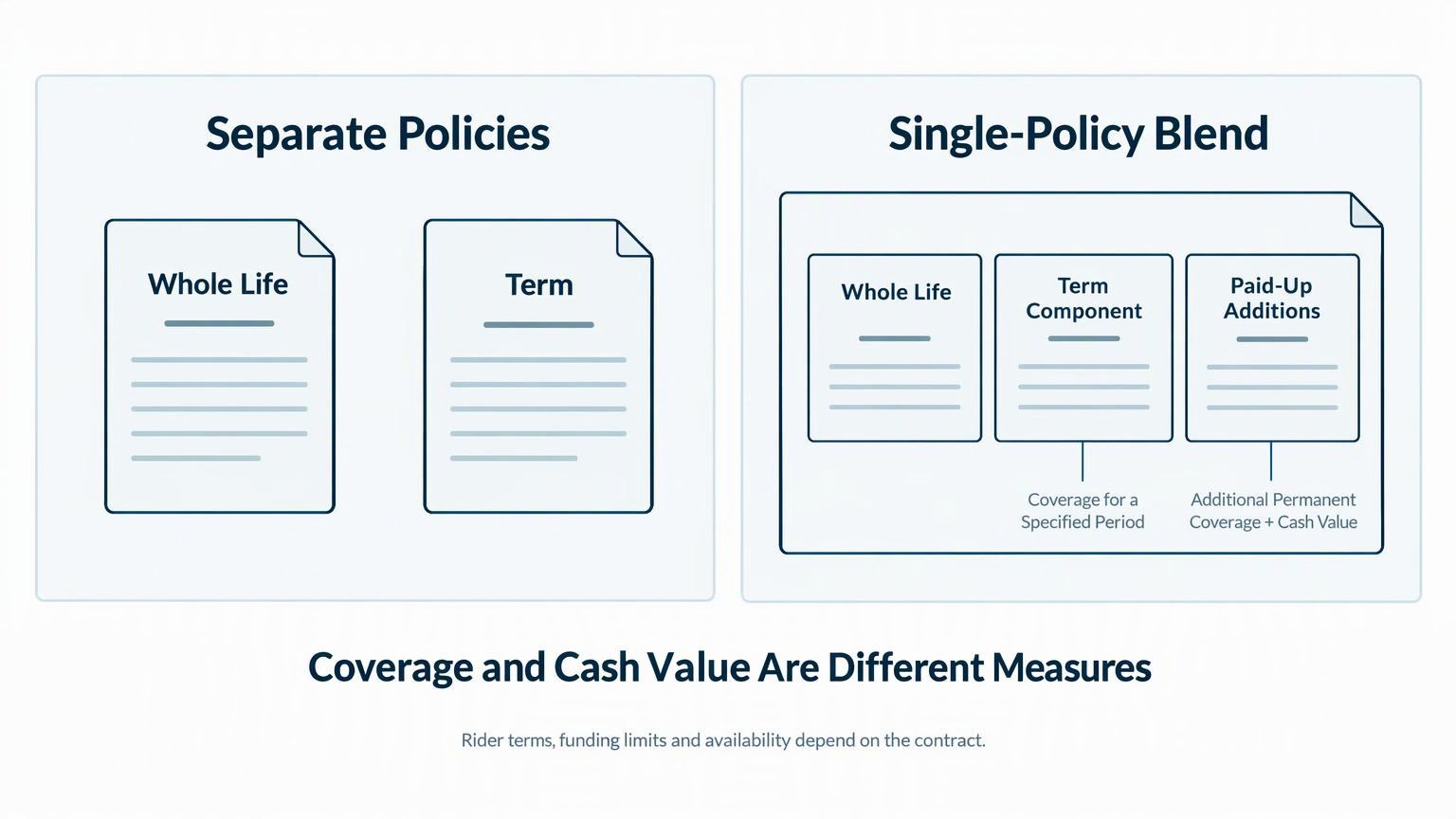
Large temporary and smaller lasting needs may warrant separate policies or a single-policy blend. Compare each component's duration, not just the starting death benefit. Rene's California life insurance guidance explains broader options.
Insurance also serves institutional purposes. The Office of the Comptroller of the Currency's BOLI guidance explains that banks use bank-owned life insurance to help offset employee-benefit costs. Institutional BOLI differs from retail whole life; bank ownership confers no FDIC coverage on the insurance.
| Situation | Suitable Approach | Reason | Trade-Off |
|---|---|---|---|
| Temporary protection need; savings must stay accessible | Term coverage with separate reserves | Separates insurance from the spending fund | No policy cash value; coverage has an endpoint |
| Lasting benefit; preference for a defined premium endpoint | Limited-pay whole life | Contract specifies the base-premium payment period | Required payments must fit the shorter funding window |
| Permanent coverage plus additional protection or cash-value funding | Blended whole life with suitable term and PUA riders | Combines different coverage components within one policy | Term costs, funding limits and early values depend on the design |
| Large temporary obligation plus a smaller lasting benefit | Separate term and whole life policies | Assigns each contract a distinct coverage job | Combined premiums must remain sustainable |
What Do Guarantees and Dividends Actually Provide?
Guaranteed values anchor the contract, subject to required payments, policy terms and the insurer's claims-paying ability. Participating-policy dividends can purchase PUAs, adding cash value and death benefits.
Guardian reports annual dividend payments since 1868 to eligible participating policyowners. MassMutual reports paying dividends to eligible participating policyowners every year since 1869. Dividends remain nonguaranteed; history does not guarantee future payments.
MassMutual's 2023 illustration separates guaranteed and nonguaranteed values and recommends testing a lower dividend schedule.
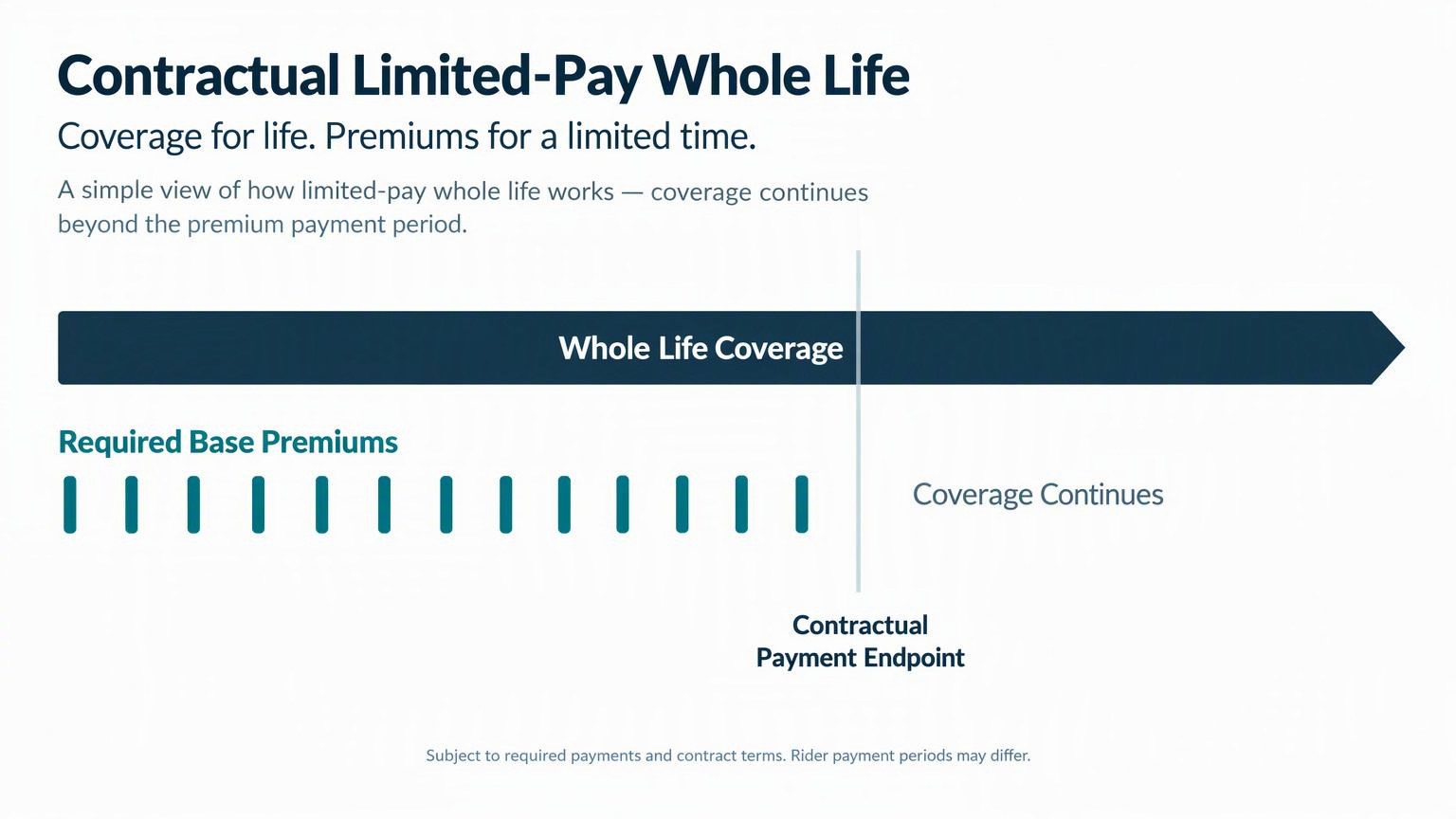
Completing a limited-pay schedule satisfies the contractual base-premium obligation. Projected dividends covering premiums are not the same as contractually paid-up coverage.
Read guaranteed values first, then illustrated enhancements. For replacement decisions, the California Department of Insurance advises against relying solely on illustrations.
Compare Payment Endpoints, Not Just Premium Amounts
Discuss whether a limited-pay or blended design fits your lasting protection goal and preferred funding schedule with Rene Farias over Zoom.
How Should You Evaluate Early Liquidity?
Evaluate early liquidity using the proposal's surrender values and loan provisions at your spending dates. PUA funding may improve early values, but does not make all premiums immediately accessible. Surrender proceeds reflect deductions and debt; full surrender ends coverage.
Hypothetical situation: A California business owner wants a lasting family benefit but needs operating reserves for an upcoming equipment purchase. Term coverage with reserves kept separate better meets that immediate constraint than funding whole life from those reserves.
With sustainable surplus beyond reserves, limited-pay or blended whole life becomes a candidate. Compare required payments and guaranteed surrender values against that surplus. Better early values do not replace accessible operating funds.
Which Cash-Access Method Fits the Purpose?
Loans provide cash while maintaining coverage, but accrue interest and reduce net death or surrender proceeds if unpaid. Surrendering eligible PUAs gives up their coverage and value; full surrender ends the policy.
For non-MEC policies, qualifying withdrawals generally recover tax basis before gain. Loans generally avoid current income taxation while coverage remains in force; surrender or lapse with debt can create taxable gain. Section 72 governs relevant distribution treatment.
Modified endowment contract distributions, including loans, generally receive gain-first treatment; taxable amounts may face an additional early-distribution tax unless an exception applies. Funding changes can affect MEC status. Review transactions with the insurer and your tax adviser, then monitor debt, interest and whether remaining values and planned payments sustain coverage.
Work With Rene Farias to Compare Actual Designs
Rene Farias is an independent insurance advisor based in Los Angeles, working with California clients and multiple carriers through Zoom strategy sessions.
Set your lasting coverage need, sustainable premium budget and preferred payment endpoint. Compare personalized illustrations consistently:
- Base/rider premiums, optional PUAs and payment duration.
- Guaranteed coverage and surrender values at matching years.
- Dividend assumptions, term changes and loan provisions.
This distinguishes design advantages from simply funding more. For ownership transitions, business succession insurance requires separate coordination: an attorney drafts agreements; a tax adviser evaluates ownership and tax consequences.
Work With Rene Farias
Rene Farias works with California families, professionals and business owners to compare insurance-based protection and retirement-planning strategies. He is based in Los Angeles and offers strategy sessions over Zoom.
Frequently Asked Questions
Should I Replace an Existing Whole Life Policy?
Not solely because a new illustration looks stronger. Replacement can introduce acquisition costs, contestability concerns and different loan or tax consequences. Compare keeping or modifying your existing contract with replacement, considering current values and your overall objectives, as California's insurance guide recommends.
Is Whole Life an Alternative to a Retirement Account?
It can supplement retirement planning, but remains insurance, not an IRA or employer retirement plan. Evaluate lasting protection separately from proposed cash access. An illustration is not a guaranteed retirement-income contract; weigh policy funding against your other savings priorities and reserve needs.
Will I Need a Medical Exam?
Requirements depend on the insurer, coverage and underwriting. MassMutual's sample illustration notes that medical information and an exam may be required. Underwriting class, premiums and riders need insurer approval. A preliminary illustration establishes neither approval nor your final policy cost.
Does a Whole Life Care Rider Replace Long-Term Care Insurance?
Not automatically. A dedicated care policy can complement separate legacy insurance. Claims affect the care contract's benefits, not automatically the separate policy. Linked-benefit care payments may reduce that contract's own death benefit. Compare triggers, duration and remaining benefits; accelerated-benefit riders are not necessarily comprehensive long-term care insurance.
Can a Business Owner Deduct Whole Life Premiums?
Usually not simply because a business owner pays them. Personal coverage, business-owned insurance and compensation arrangements raise different questions. Rene can compare insurance options; your tax adviser should evaluate the actual ownership and payment arrangement before you assume a business deduction.
References
- MassMutual: Whole Life 10 Pay Sample Illustration, May 3, 2023
- MassMutual: What Is a Rider on a Life Insurance Policy?
- California Department of Insurance: Life Insurance Guide
- Legal Information Institute: 26 U.S. Code Section 72
- Understanding the Dividend Difference
- Whole life dividends and returns explained
Choose the Whole Life Design That Fits Your Funding Plan
Bring your preferred premium endpoint and existing illustration to a strategy session with Rene Farias. Compare required funding and usable values against your lasting protection goals.