
Why IUL Is Called a Bad Investment: An Honest California Review
IUL deserves criticism when it is sold as uncomplicated investing: insurance charges, limited index crediting and long-term funding affect results. Choose separate protection and investing if those are your priorities. A properly designed IUL may suit lasting coverage and supplemental planning when funding is sustainable and contractual guarantees are understood.
Searching for why IUL is a bad investment often follows a retirement-income presentation. Start by separating two jobs: protecting beneficiaries and building accessible cash. California families, professionals and business owners can then judge the proposal rather than accept or reject the entire category.
Key Considerations
- Choose the coverage structure before comparing projected accumulation.
- A coverage guarantee and an index-crediting floor protect different things.
- Planned cash access needs sustainable funding, tax testing and loan monitoring.
Which Criticisms Should Change Your Choice?
The strongest criticism applies when you want investment growth without lasting insurance. Term coverage with separate investing avoids buying permanent protection you do not need.
IUL combines lasting coverage, index-linked interest potential and possible cash access. That combination may suit long-term needs, but does not establish investment outperformance.
Compare whole life too. Contractual limited-pay designs end required base premiums after a specified period. Dividend offsets project using nonguaranteed dividends to pay premiums, not a guaranteed endpoint. Where available, term and paid-up-addition riders blend coverage within one policy. Guaranteed values remain distinct from dividends. Our California life insurance guidance helps compare these funding and benefit structures.
How Do Index Credits and Costs Affect Usable Value?
Index-linked crediting offers growth potential without stock-index ownership. Floors limit crediting downside; caps, participation rates and spreads shape interest. Nonguaranteed terms may change within contractual limits.
Credits are not net returns: premium, insurance, administration and rider charges reduce value even with a zero floor. Contractual maximum charge schedules set the ceilings permitted by the policy; current deductions may be lower and are not necessarily guaranteed. Compare both when assessing future funding.
Nationwide's IUL Protector II guide describes holding estimated upcoming charges in a fixed strategy for monthly deductions, one product's method.
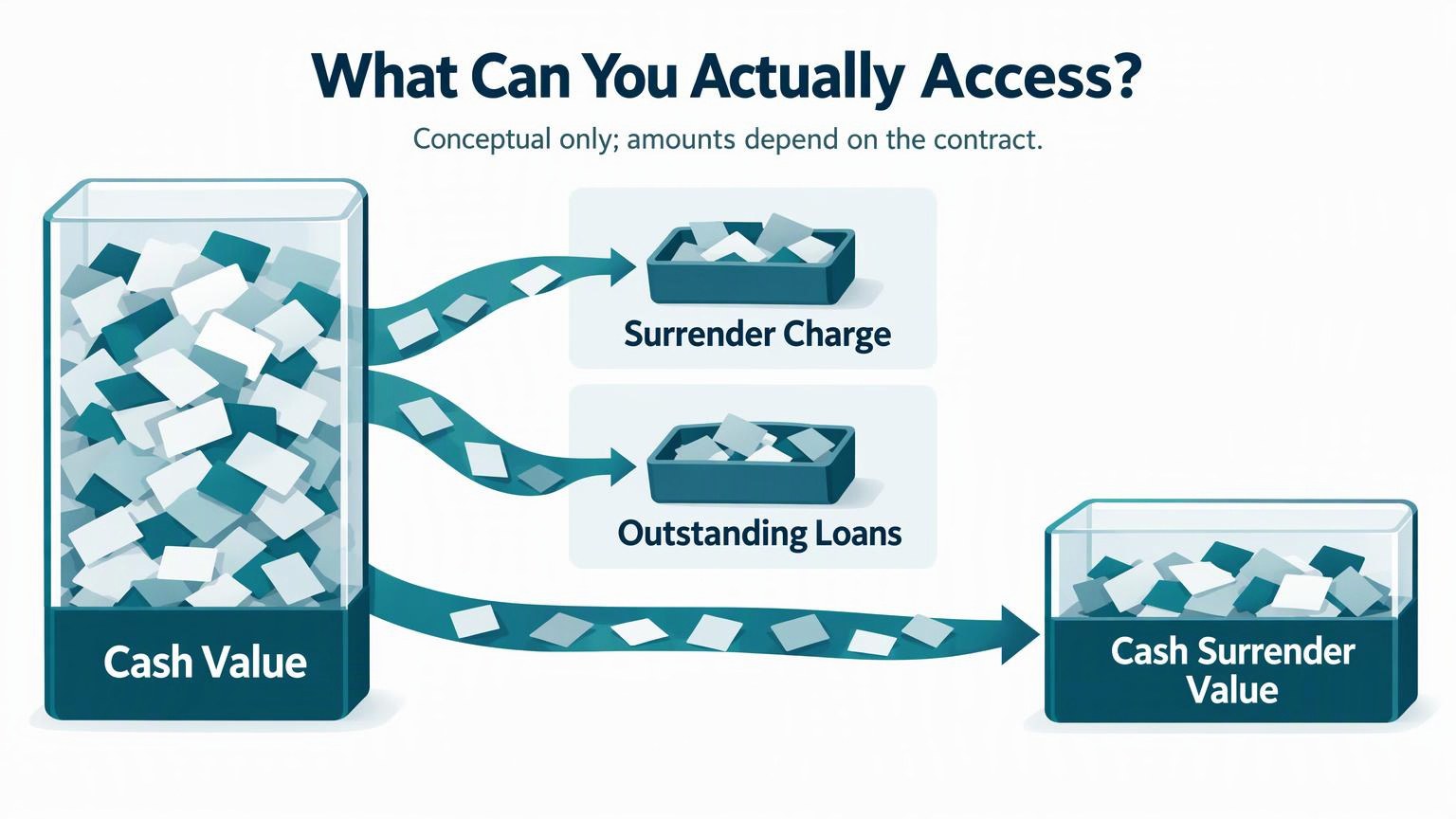
Account value reflects credits and deductions; net surrender value also reflects surrender charges and debt. Once a surrender schedule expires, its surrender charge no longer reduces the amount available on surrender. Ongoing charges and debt still affect value; added coverage may carry a new schedule.
Verify waiver eligibility, scope and cost. Nationwide's Surrender Value Enhancement Rider charges monthly and enhances specified products' full-surrender value, not loan or withdrawal cash. Confirm California approval and eligibility before including this rider in your comparison.
| Approach | Suitable When | Trade-Off |
|---|---|---|
| Term coverage plus separate investing | Protection is temporary and independent investment choices matter. | No policy cash value; investment risk and taxation remain separate. |
| IUL | Lasting protection and index-linked supplemental accumulation both matter. | Funding, charges, crediting limits and cash-access assumptions need monitoring. |
| Whole life | Lasting protection with contractual premium and guaranteed-value schedules matters more. | Compare limited-pay or blended designs where available; dividends are not guaranteed. |
What Does Proper Funding Actually Protect?
Funding supports coverage, accumulation or both. Start with protection goals and affordable payments; have the carrier calculate MEC and seven-pay limits. The tax ceiling is not a recommended premium.
- Planned premium: your design's payment schedule.
- No-lapse requirement: a contractual funding test for specified coverage duration.
- Actual charges: itemized deductions, not that funding test.
- Non-MEC boundary: carrier-calculated limits affecting distribution taxation, subject to testing and changes.
Conditional no-lapse protection may preserve coverage despite insufficient account value. Identify its duration, payment-timing requirements and treatment of loans, withdrawals and changes; protection is not automatically lifelong.
Subtracting a no-lapse premium from planned payments does not reveal accumulation. Coverage guarantees depend on the issuing insurer's claims-paying ability, not illustrated cash value or income.
Separate Your Coverage Promise From Your Cash Projection
Discuss with Rene which benefits your proposed funding supports and whether another insurance structure better matches your priorities.
How Should Variable Income Change the Design?
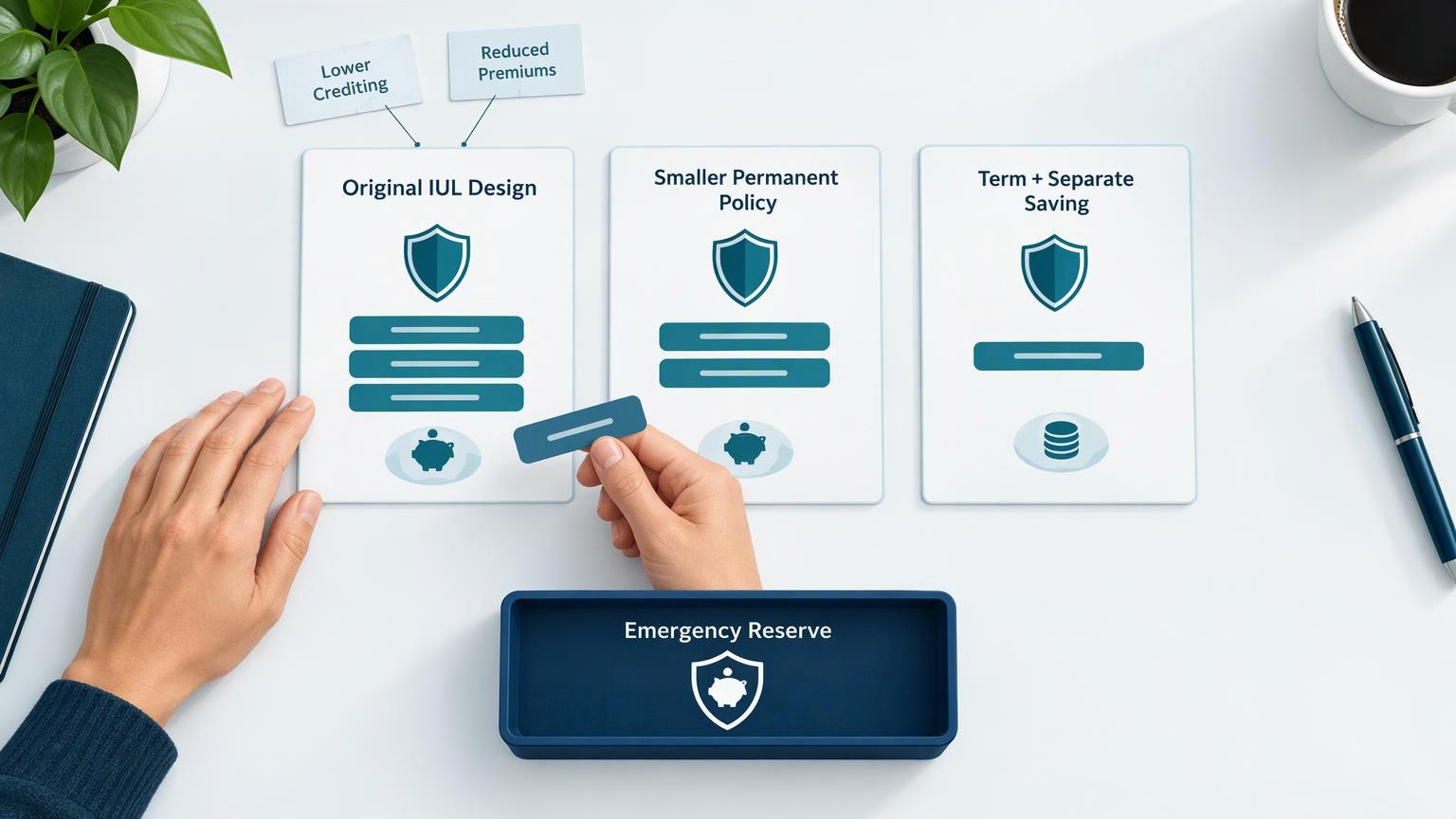
Variable income calls for funding that preserves emergency reserves. Reduced planned premiums may be possible if available value and coverage tests suffice, but can reduce accumulation or require later payments.
Hypothetical example: A California business owner wants lasting protection and supplemental retirement cash. The IUL assumes uninterrupted funding followed by loans, but reserves must remain available.
A reduced-funding illustration shows later payments exceeding the sustainable budget. Reject that design; compare a smaller permanent policy if protection remains adequate, or another permanent structure. If protection is temporary, consider term with separate saving.
For a disability waiver, verify whether it waives deductions or credits premiums, and qualifying conditions. Do not assume it funds the accumulation plan.
How Can Supplemental Cash Access Work?
Non-MEC life insurance can offer tax-advantaged basis withdrawals and loans. TFRA and LIRP are strategies, not IRS account types; see our TFRA strategy disclosures.
Qualifying non-MEC withdrawals generally recover adjusted basis first; excess may be taxable. Loans may avoid current income tax while the qualifying policy remains in force, but accrue interest and reduce net benefits. Surrender or lapse with debt can create taxable gain without new cash.
Internal Revenue Code Section 7702A defines the MEC seven-pay test. Certain benefit reductions and material changes affect testing. MEC distributions generally reach gain first; loans count as distributions, and additional tax may apply.
Compare loan costs, credits, remaining coverage and funding needs. Non-MEC status does not establish sustainable borrowing.
Work With Rene Farias
Rene Farias, an independent insurance advisor based in Los Angeles, works with California clients and multiple carriers. Zoom strategy sessions compare insurance-based protection and supplemental planning around your goals and budget.
- Establish coverage purpose, duration and sustainable funding.
- Compare insurance structures and death-benefit options.
- Review guaranteed and nonguaranteed illustrations with lower crediting, reduced funding and intended cash access.
- Resolve charges, guarantee conditions, surrender values, loan terms and carrier-calculated tax limits.
Bring your proposal or statement; request an in-force illustration for existing coverage. Monitor funding, guarantees, values and debt, with carrier testing before extra premiums or benefit changes. Consult your tax adviser on taxation and attorney on estate documents. Decide whether to keep, revise or decline.
Work With Rene Farias
Rene Farias works with California families, professionals and business owners to compare insurance-based protection and retirement-planning strategies. He is based in Los Angeles and offers strategy sessions over Zoom.
Frequently Asked Questions
Should I Cancel an Existing IUL After Reading Criticism?
Not automatically. Use an updated in-force illustration to compare keeping, adjusting and surrendering. Include guarantees, surrender charges, loans and possible taxable gain. Replacement requires new underwriting and contract costs. Before canceling needed protection, understand the consequences and establish whether suitable replacement is available.
Does My Family Receive Both Cash Value and the Death Benefit?
Usually not with a level death benefit: account value forms part of the stated benefit, subject to contractual adjustments. An increasing option generally adds account value but may raise insurance costs. Debt reduces net benefits. Compare options against protection needs, funding and intended borrowing.
Does Underwriting Approval Mean the Proposal Suits Me?
No. Approval means the insurer will issue coverage under its underwriting requirements. It does not establish that payments, liquidity restrictions or projected income fit your finances. Insurability and planning suitability are separate decisions. Complete the funding review even after an application is approved.
Can a Business Owner Deduct IUL Premiums?
Usually, business ownership does not make life insurance premiums deductible. Individually owned IUL is not automatically an employer retirement plan. Employer-owned coverage and compensation arrangements need separate tax and legal analysis. Do not assume a deduction because someone calls the policy a business strategy.
What Review Rights Does California Provide After Delivery?
The California Department of Insurance's Life Insurance Guide explains individual policies' return-for-cancellation period and additional senior and replacement rules. Follow the notice delivered with your policy, including its deadline and return instructions. This initial review right differs from later surrender under the contract's surrender provisions.
Decide Whether to Keep, Resize or Decline the Proposal
Bring your proposal or current policy statement to a Zoom strategy session with Rene Farias. Compare sustainable funding and lasting protection needs against the actual design, then decide whether to keep, resize or decline it.